
Artificial intelligence has largely been discussed through the lens of digital productivity, automation and enterprise knowledge, but a significant frontier remains in making the physical economy intelligible in real time. From agricultural grading and commodity procurement to manufacturing, logistics and retail, the ability to interpret visual information could fundamentally alter how businesses assess quality, allocate resources and make commercial decisions. In this exclusive AgroSpectrum interview, Amit Srivastava, Co-Founder and Chief Technology Officer, Constems AI, examines why Vision AI could become the next foundational layer of enterprise intelligence. He discusses India's opportunity to build indigenous Vision AI capabilities, the technological challenges of deploying computer vision in unpredictable agricultural environments, and the importance of explainability, governance and operational reliability. The conversation also explores how visual intelligence could reduce information asymmetry in agricultural markets, strengthen grading transparency and improve the economics of agricultural value chains. The larger proposition is consequential: the next competitive advantage may belong to enterprises that do not merely digitise their operations, but develop the intelligence to continuously understand the physical world.
Why will Vision AI create the next wave of enterprise value?
What if enterprises could understand the physical world with the same immediacy with which they understand their digital systems? That changes the game. Most enterprise value is still created in the physical world. Products move through factories, crops are graded, shelves go empty, and infrastructure changes continuously. Yet conventional systems often understand these events only after they are reported.
Vision AI changes that by enabling machines to see, understand context and convert visual signals into decision-ready intelligence in real time. Generative AI is transforming how organisations create and interact with information; Vision Intelligence addresses what is actually happening on the ground. I believe the next wave of enterprise AI will not come from automating one more task. It will come from making the physical world continuously visible, understandable and actionable. Once an enterprise can do that, the state of decision-making changes, from delayed reaction to real-time intelligence.
Can Vision AI make agricultural grading more transparent and trusted?
In agriculture, information asymmetry often begins where quality is assessed. Farmers may know their produce intimately but have limited visibility into how a grade is assigned or why it affects commercial value. Vision Intelligence can make grading more consistent, measurable and traceable by evaluating visible quality parameters against defined standards and applying the same logic repeatedly. Our engagement with the Tobacco Board of India on AI-based grading of FCV tobacco bales demonstrates this potential.
The objective is not to remove human expertise, but to augment it with an auditable intelligence layer. When grading becomes more consistent and explainable, trust can improve across farmers, buyers, exporters and regulators. Over time, this can help create markets where quality decisions are less dependent on interpretation and more firmly anchored in evidence.
Are we overlooking computer vision as a strategic national capability?
A large part of India’s economy operates in the physical world, across agriculture, manufacturing, logistics, retail and public infrastructure. The information these sectors need already exists physically: in produce, products and assets. Vision AI captures and interprets this information in real time. This real-time visibility makes it a strategic national capability. These environments are shaped by local conditions, varied practices and fragmented systems. Agriculture alone spans millions of farms, diverse crops and highly variable conditions. Building intelligence around these realities makes owning Vision AI imperative for India.
For Constems AI, this is the premise of Native AI: building intelligence grounded in India’s realities. That also means owning the deep-tech stack behind it, from APU and inference engine to vertical foundation models and enterprise applications which we do, rather than depending on intelligence built elsewhere. From grading produce to manufacturing goods and managing infrastructure, India can build the foundational Vision AI its industries need. India should be more than one of the world’s largest AI adopters; it should help define what Vision AI must become.
How should businesses and regulators approach explainability and governance?
As Vision AI begins influencing pricing, quality acceptance and commercial outcomes, trust cannot be an afterthought. Systems must make it possible to understand what was evaluated, which parameters influenced the outcome and where human review is required. Governance should therefore be built into the architecture through traceable inputs, documented model performance, periodic validation, clear accountability and defined escalation or override mechanisms.
In high-impact environments, the goal should not be a black-box decision engine. It should be an auditable intelligence layer that improves consistency without removing institutional responsibility. As Vision Intelligence becomes part of critical infrastructure, adoption will increasingly depend on whether enterprises and regulators can understand, defend and continuously validate the decisions being made.
What are the biggest technological challenges in agricultural Vision AI?
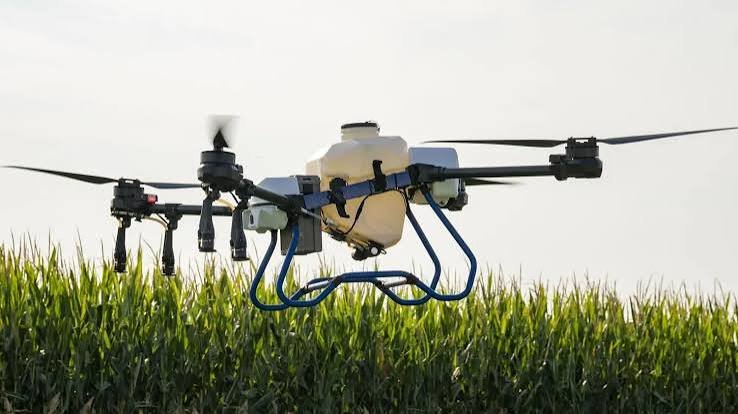
Agriculture is a reminder that the physical world does not behave like a laboratory. Lighting changes, crop characteristics vary, handling practices differ and the same commodity can look different across regions and seasons. The challenge is therefore not simply to build an accurate model, but one that remains reliable when real-world conditions change. That requires diverse data, continuous validation, model optimisation and deployment flexibility across edge, cloud and on-premise environments.
At Constems AI, this thinking is built into 3N, our proprietary Large Vision Modal Model, and CAInatics, our Vision Intelligence Engine. The real benchmark is not laboratory accuracy. It is whether the technology can consistently see, interpret and perform under production conditions. In agriculture, robustness is what separates a successful demonstration from technology that people can actually trust on the ground.
What common intelligence layer connects such diverse industries?
Retail, manufacturing, agriculture, insurance and logistics appear different, but they share one underlying problem: enterprises often lack continuous understanding of what is happening in their physical environments. The common layer is Vision Intelligence. Whether the visual input comes from a shelf, production line, commodity, asset or warehouse, the intelligence must recognise what is present, understand context and translate that understanding into action.
That is the role CAI is building through 3N and the CAInatics Vision Intelligence Engine. ERP created a common digital layer for business processes, while cloud created shared computing infrastructure. Vision Intelligence can become the cognitive layer for physical operations. The shift will begin when enterprises stop deploying isolated vision applications and start building reusable visual intelligence across functions, sites and industries.
Where will Vision AI deliver the greatest economic value in agriculture?
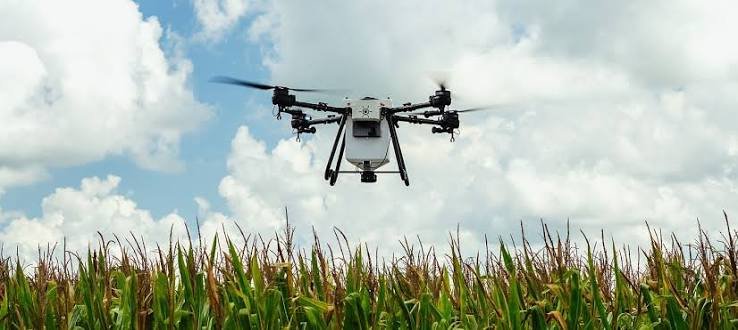
The greatest economic value will come when Vision Intelligence connects the agricultural value chain rather than improving one stage in isolation. On the farm, it can support crop monitoring and early identification of visible issues. At procurement and auction centres, it can make grading more consistent and transparent. During processing, it can strengthen sorting and quality control. Across storage and logistics, it can identify deterioration, damage and handling inefficiencies before they become losses.
The larger opportunity is continuity of intelligence from production to market. That can improve traceability, reduce information gaps and strengthen quality standards, all of which matter for food security and export competitiveness. For India, even marginal gains in grading consistency, post-harvest loss reduction or process efficiency can create significant economic value at scale.
How will enterprises interact with Vision AI five years from now?
Five years from now, Vision AI should no longer be viewed as a specialised inspection tool. The larger transition is towards a cognitive vision layer that continuously observes physical environments, understands what is changing and helps trigger the appropriate response. In factories, that could connect quality, productivity and safety. In agriculture, it could link grading, traceability and procurement. In warehouses and cities, the same layer could interpret movement, assets and infrastructure in real time.
The milestone will not be the number of cameras connected to AI. It will be the number of enterprise decisions informed by a common Vision Intelligence architecture. Another signal will be integration: Vision AI moving from isolated pilots into core enterprise systems. When visual intelligence becomes persistent, interoperable and embedded in everyday operations, it will have crossed from tool to infrastructure.
-- Suchetana Choudhury (suchetana.choudhuri@agrospectrumindia.com)