For agrifood investors, 2025 was the year the money stopped falling and started thinking. AgFunder’s Global AgriFoodTech Investment Report 2026 puts total venture funding for the sector at US$16.2 billion in 2025, flat on the year before. That sounds like stagnation. Look under the headline and you find a market reorganising itself around a simple question: what does the world actually need from food and farming technology when supply chains, climate and geopolitics are all misbehaving at once?
The answer, judging by where the cheques went, is less convenience and more resilience. Upstream funding, which covers the farm and food production end of the chain, rose 7 per cent to US$9 billion, while eGrocery and food delivery kept shrinking. Deal count fell 12 per cent, so fewer companies shared the pot. Debt made up 18.2 per cent of all agrifood funding, its highest share in a decade, according to AgFunder. Investors are being choosier, and founders are being asked to show real revenue, real assets and real defensibility.
Asia-Pacific sits at the centre of this shift, though not as one market. China’s state-backed capital is behaving like the patient investor of last resort. India still raises more agrifood venture money than any developing market, but its founders are now eyeing public markets rather than mega-rounds. Southeast Asia is still nursing a hangover. Australia is rethinking how its ecosystem connects capital to innovation. As boards and fund managers sit down for year-end planning, here is where the money is heading.
The reset in numbers
The country data from AgFunder’s 2026 report tells a story of divergence. China’s agrifoodtech funding grew 43 per cent to US$1.2 billion in 2025, with deal volume up 16 per cent. Japan rose 24 per cent to US$365.3 million. South Korea surged 171 per cent to US$253.3 million. India, by contrast, fell 20 per cent to US$2.2 billion across 188 deals, though that still made it the largest developing market by a wide margin, roughly ten times Brazil in second place.
Table: Agrifoodtech venture funding, selected markets, 2025
|
Market |
2025 funding (US$) |
Change vs 2024 |
What is driving it |
|
India |
2.2 billion (188 deals) |
Down 20% |
Fewer late-stage rounds; shift to debt and profitability |
|
China |
1.2 billion |
Up 43% |
State-backed biotech and automation investment |
|
Japan |
365.3 million |
Up 24% |
Corporate and deeptech activity |
|
South Korea |
253.3 million |
Up 171% |
Rebound from a low base |
|
United States (benchmark) |
5.9 billion (507 deals) |
Down 8% |
Still the largest single market |
Source: AgFunder Global AgriFoodTech Investment Report 2026.
The longer view matters too. AgFunder’s Asia-Pacific data shows the region raised US$6.5 billion in 2022, when Southeast Asia alone accounted for US$1.7 billion and Indonesia US$716 million. By 2024, Southeast Asian funding had fallen 23 per cent to US$361 million and Australia and New Zealand were down 30 per cent to US$190 million, even as India’s surge lifted the regional total.
Table: Where the theme money is going (editorial assessment for 2027)
|
Theme |
Evidence of momentum |
AgroSpectrum Asia outlook |
|
Ag biotech and biologicals |
Asia-Pacific ag biotech rose from US$142 million in 2021 to US$813 million in 2022 (AgFunder); China’s growth in 2025 driven by state-backed biotech |
Strong |
|
Farm robotics and drones |
Deal activity held steady in 2025 while almost every other category fell (AgFunder) |
Strong |
|
Precision fermentation and biomanufacturing |
China reportedly holds more than 70% of global fermentation capacity; Singapore’s ScaleUp Bio offers shared capacity |
Selective |
|
Climate tech within agrifood |
Recovered to US$3.9 billion in 2025 from US$2.8 billion (AgFunder) |
Strong |
|
eGrocery and delivery |
Still shrinking globally |
Weak |
Deeptech is the clearest winner of the selectivity. AgFunder found deeptech accounted for 32 per cent of agrifood deals in 2025, up from 22 per cent a decade ago, and seed-stage deeptech rounds closed at a 78 per cent premium to their non-deeptech peers. The catch is at the growth stage: no deeptech agrifood company raised more than US$200 million in a single round in 2025. AgFunder also counted five hard failures among the 33 deeptech companies that raised rounds of US$200 million or more between 2019 and 2022, all in novel farming or innovative food. That gap between early enthusiasm and late-stage scarcity is exactly where Asia’s state investors and public markets are stepping in.
China: the state as patient investor, and Hong Kong’s open window
China has made food security, biomanufacturing and technological self-reliance national priorities, and its financial architecture is following. AgFunderNews has described how national and provincial guidance funds, structured as funds of funds with long time horizons, are taking stakes in agritech companies after early validation and carrying them through scale-up, the stage where private venture money is thinnest. Listing routes such as Shanghai’s STAR Market and Hong Kong’s Chapter 18C regime for pre-profit technology companies complete the pathway.
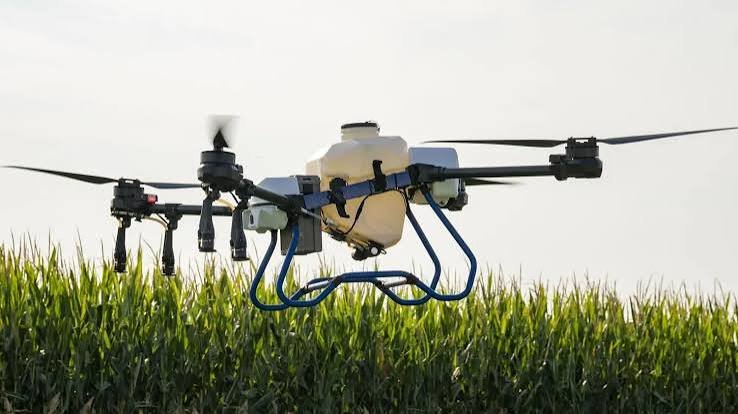
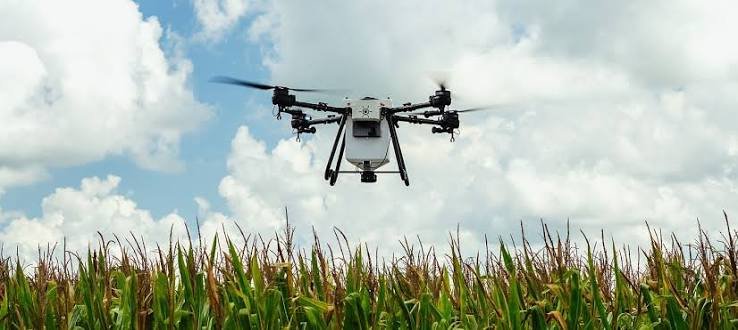
Hong Kong has become the exit valve. Pork giant Muyuan Foods raised HK$10.7 billion, about US$1.4 billion, in a Hong Kong listing completed in early February 2026, billed at the time as the city’s largest IPO of the year. The pipeline behind it is more interesting for technology investors. Guangzhou-based agricultural drone maker XAG filed its Hong Kong prospectus in September 2025 after turning its first annual profit in 2024, on revenue of more than RMB 1 billion. Frost & Sullivan ranked it second globally in agricultural drones in 2024, and around 35 per cent of its revenue already comes from overseas.
What makes XAG a useful bellwether is the headroom it describes. The company has said that only about 8 per cent of China’s farmland uses agricultural drones, leaving more than nine-tenths of the market untouched, and that overseas revenue could overtake domestic sales by 2028. For investors, that is the profile Asia’s automation thesis rests on: a proven product, a profitable base and a long runway driven by rural labour shortages rather than consumer fashion.
The biggest agri listing of all has stalled. Syngenta Group, which had been reported to be targeting as much as US$10 billion before plans settled at around US$5 billion, was by July 2026 said to be waiting for better sector conditions, with a 2027 listing now seen as more likely, according to Bloomberg reporting. Disruption to fertiliser supplies through the Strait of Hormuz has weighed on crop input markets this year. If Syngenta does list in 2027, it will reset valuations for every agri-input company in the region.
India: from mega-rounds to the listing queue
India’s 2025 decline looks less like a retreat than a maturing. In 2024 Indian agrifood startups raised US$2.5 billion, a fourfold jump on the year before, so some normalisation was inevitable. What has changed is the character of the capital. Samunnati, the agri value-chain lender, raised US$267 million in 2025 in one of the year’s notable debt-led deals, consistent with AgFunder’s finding that debt is taking a larger share globally.
The listing pipeline is building from the asset-heavy end first. Telangana-based Eldorado Agritech, which sells seeds under the Srikar Seeds brand alongside agrochemicals and biostimulants, filed draft papers with SEBI in September 2025 for an IPO of about ₹1,000 crore. Innoterra India, the Indian arm of a Swiss food and agritech group that runs a digital platform linking farmers with enterprise buyers, has filed for a smaller issue including a ₹105 crore fresh issue. These are profitable or near-profitable businesses with physical supply chains, not pure software stories.
The platform names are taking a slower route. DeHaat chief executive Shashank Kumar said in mid-2025 that the company had turned profitable in the April to June quarter, on annual revenue of about ₹3,000 crore, but had no IPO plans for the next two years. That sequencing, profitability first and listing second, is likely to define Indian agritech’s first public wave.
Southeast Asia: the long hangover after eFishery
No market in the region has felt the trust deficit more sharply. eFishery, the Indonesian aquaculture platform once valued at more than US$1 billion and backed by SoftBank, Temasek, Peak XV and Aqua-Spark, collapsed amid allegations that revenue had been inflated for years. Investor losses have been estimated at about US$300 million. Co-founder Gibran Huzaifah was sentenced to nine years in April 2026, a term the Bandung High Court later cut to six, according to DealStreetAsia.
The consequence for founders across Indonesia, Vietnam and the Philippines is heavier due diligence, slower rounds and investors demanding audited financials earlier. Singapore is trying to rebuild the bridge. The Further Food and Ag Investment Summit, organised with AgFunder as a curtain-raiser to Singapore International Agri Week, was launched explicitly to close the region’s funding gap. ScaleUp Bio, the precision fermentation facility set up by ADM and Temasek’s Asia Sustainable Foods Platform, gives startups shared capacity rather than asking each to finance its own plant, a model that suits capital-scarce times.
Australia and Japan: ecosystems in transition
Australia’s story in 2027 will be about infrastructure as much as deals. AgriFutures growAG, the online platform that showcased more than 700 Australian and international organisations and their investment opportunities, has announced it is closing on 30 November 2026. Its departure leaves a gap in how overseas investors discover Australian research and startups, and the ecosystem around evokeAG, rural research corporations and specialist funds will need to fill it. With Australia and New Zealand funding already down to US$190 million in 2024, the market cannot afford weaker deal flow.
Japan is quietly moving the other way. Its 24 per cent rise in 2025, to US$365.3 million, came in a market where an ageing farm workforce makes automation and biology a necessity rather than a fashion. For regional founders, that makes Japanese strategic investors worth courting as sources of growth capital and distribution, and they tend to be more patient than purely financial backers.
Five predictions for 2027
1. Hong Kong becomes Asia’s agritech exit market. If XAG lists and Syngenta returns, Hong Kong will offer a credible public valuation benchmark for robotics and agri-inputs, pulling Chinese and possibly Southeast Asian companies towards it.
2. India’s first agritech listings are asset-backed. Seed, dairy sourcing and input companies will reach the market before marketplace platforms, which will continue to prioritise profitability.
3. Debt and blended finance keep gaining share. Lenders, development finance institutions and revenue-based structures will fund working capital and infrastructure that equity investors no longer want to carry alone.
4. Biologicals and robotics outrun alternative protein. Investors will favour technologies that cut input costs or labour needs today, while precision fermentation draws money mainly through shared facilities and corporate partnerships.
5. Southeast Asia recovers slowly, on governance. Rounds will return for companies with audited accounts and strong boards, and Singapore will remain the region’s capital and structuring hub.
The common thread is patience. The money is there, but it wants proof, assets and a credible route to exit, and it is willing to wait for all three.
What to watch in 2027
- Whether XAG completes its Hong Kong listing and how its valuation compares with other robotics names.
- The timing and size of Syngenta Group’s revived Hong Kong IPO plans.
- SEBI approvals and market reception for Eldorado Agritech and Innoterra India.
- AgFunder’s next Asia-Pacific and global reports, particularly whether Southeast Asian funding stabilises.
- How Australia replaces the investor discovery role played by growAG after its closure.
- Fertiliser supply through the Strait of Hormuz and its effect on agri-input valuations.