The race to keep rice blast under control is increasingly becoming a race against fungicide resistance. Researchers at Nanjing Agricultural University (NJAU) have identified a previously unrecognised binding pocket in the rice blast pathogen’s succinate dehydrogenase (SDH), creating a potential new route for developing fungicides that can work beyond the resistance patterns associated with conventional SDH inhibitors.
A team led by Professor Zhang Zhengguang from the College of Plant Protection at NJAU published the findings on 15 September 2026 in Plant Communications in a paper titled Targeting a Cryptic Magnaporthe oryzae-Specific Pocket in Succinate Dehydrogenase to Combat Rice Blast.
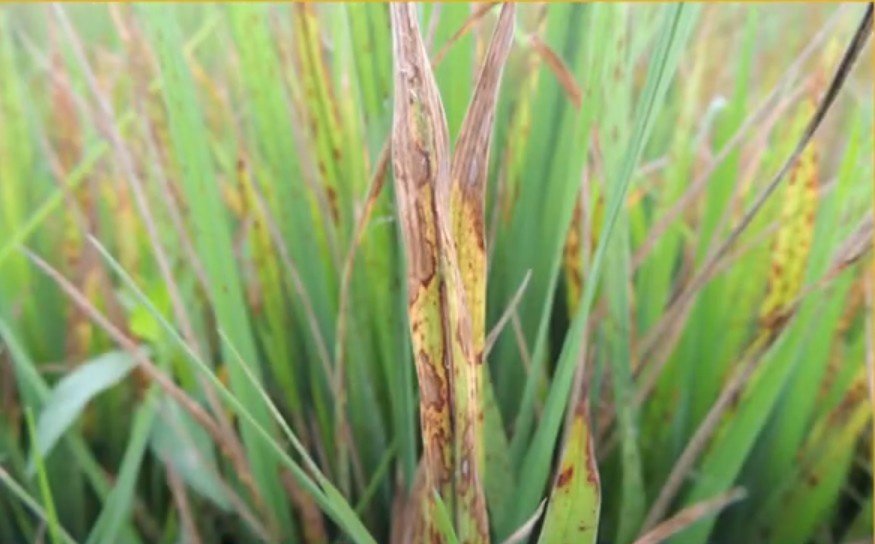
The study focuses on Magnaporthe oryzae, the fungal pathogen responsible for rice blast, one of the most important diseases affecting rice production globally. The disease can attack different parts of the rice plant, with panicle neck blast posing a direct threat to grain formation and yield.
Succinate dehydrogenase is a long-established fungicide target. Conventional succinate dehydrogenase inhibitor (SDHI) fungicides largely bind to the relatively conserved ubiquinone-binding site, or Q-site, of the enzyme. That conservation, however, creates a vulnerability: because different SDHIs can interact with overlapping regions, a single amino acid mutation at the Q-site can reduce sensitivity to several fungicides at once, creating cross-resistance.
The NJAU researchers took a different approach. Instead of modifying compounds around the established Q-site, they searched for another exploitable region within SDH and identified a cryptic pocket specific to M. oryzae. The pocket is distinct from the conventional binding site, providing a structural basis for designing compounds that interact with the same core target through a different binding mode.
Using this pocket as the design basis, the researchers developed PD13 as a lead compound. The compound disrupts SDH function while showing no cross-resistance with conventional SDHIs, according to the study.
That distinction is important for fungicide development. When resistance is driven by mutations around a shared binding site, adding another compound that relies on essentially the same interaction can offer limited room to manoeuvre. A compound designed against a different pocket could potentially create a separate resistance-management option while retaining SDH as the underlying biological target.
The researchers also moved beyond laboratory testing to evaluate PD13 under field conditions. In trials against panicle neck blast conducted in a natural disease nursery, PD13 delivered stable control efficacy comparable with the reference fungicide tricyclazole.
The study further reports encouraging preliminary safety results. PD13 showed high safety towards yeast and Caenorhabditis elegans and caused no observed phytotoxicity in rice in the assessments conducted by the researchers.
The broader significance of the work extends beyond one lead compound. SDH has been studied extensively as a fungicide target, but the identification of an adaptive cryptic pocket in M. oryzae expands the potential structural space available for chemical intervention. Rather than abandoning a proven target because resistance has emerged around its conventional binding site, the research demonstrates how previously hidden regions of the same target can potentially be exploited.
For rice disease management, the approach could offer a new way to think about fungicide discovery. The challenge is no longer simply finding another molecule that inhibits SDH, but finding ways to engage the target differently enough to avoid the resistance liabilities created by existing chemistries.
PD13 remains a lead compound rather than a commercial fungicide, and further development will be required to establish its performance, selectivity, environmental profile and commercial potential under broader agricultural conditions. But the NJAU study provides a proof of concept that cryptic pockets can be used to expand the fungicide-design landscape without changing the underlying target.
As fungicide resistance continues to complicate disease management, such target-based approaches could become increasingly important. The research points to a broader strategy for crop protection: instead of continually moving away from established targets, scientists may be able to find new vulnerabilities within them.