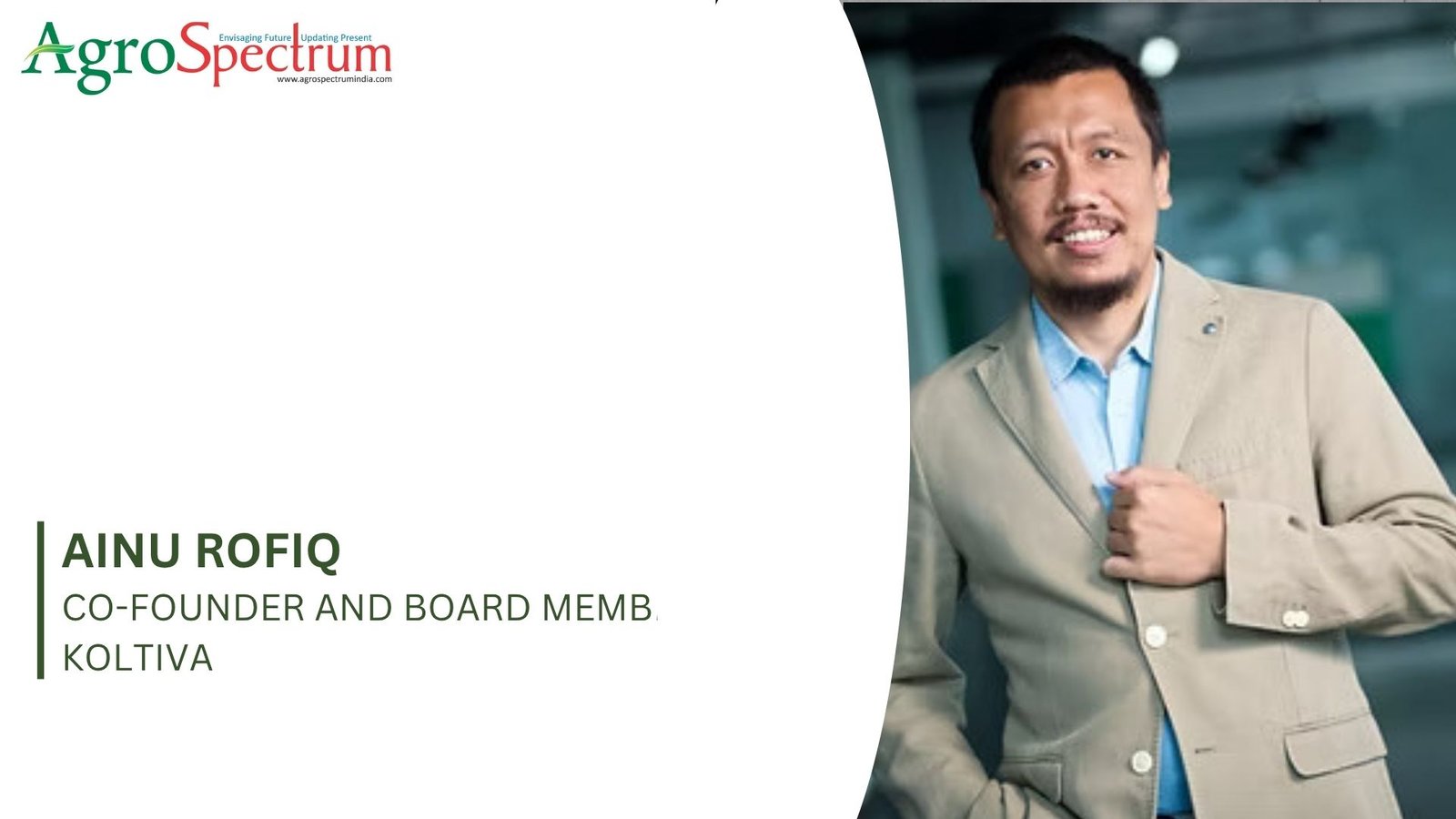
Traceability is no longer just about ticking boxes on a sustainability checklist—it is becoming a basic condition for doing business in global agricultural markets. With regulations such as the EUDR tightening the rules, companies are under growing pressure to know exactly where their commodities come from and to prove it with reliable data. But the hardest part of this transition is not technology; it is reaching the smallholders and fragmented suppliers who sit at the very beginning of the chain. In this issue, AgroSpectrum features an exclusive interview with Ainu Rofiq, Co-Founder and Board Member at Koltiva, who explains why traceability has moved from a back-office compliance function to a boardroom concern tied directly to revenue and market access. He also makes a compelling case for building systems that farmers can actually use—and benefit from—rather than simply passing the cost of compliance down the supply chain. From satellite monitoring and AI to predictive risk analytics, the next generation of traceability could make supply chains more transparent, proactive and resilient. Ultimately, the companies that treat traceability not as a regulatory burden but as an investment in trust, market access and better supply chains are likely to be the ones that stay ahead.
The EUDR is often framed as an environmental regulation, but many companies now see it as a market-access issue. Has traceability officially moved from being a sustainability function to a boardroom-level business imperative?
Yes, and honestly it should have happened sooner. For years traceability sat inside sustainability teams, treated as a reporting exercise: collect the data, publish the report, move on. What's changed is that traceability is now the gate you have to pass through to sell into the EU at all. If you can't prove where your commodity came from, down to a geolocation point, you don't get market access. That's not a sustainability conversation anymore, that's a revenue conversation.
We've watched this shift happen in real time with our clients. Two years ago, the traceability brief came from a CSR or sustainability lead. Today it's coming from the CEO's office or the board, because the risk isn't reputational anymore, but it's existential to the business line. If your biggest buyer is in Europe and you can't comply, you don't lose a rating, you lose the account.
China exports more than €11 billion worth of wood and rubber products to the EU annually. In your assessment, what percentage of exporters are truly prepared for end-to-end traceability requirements, and where are the biggest readiness gaps?
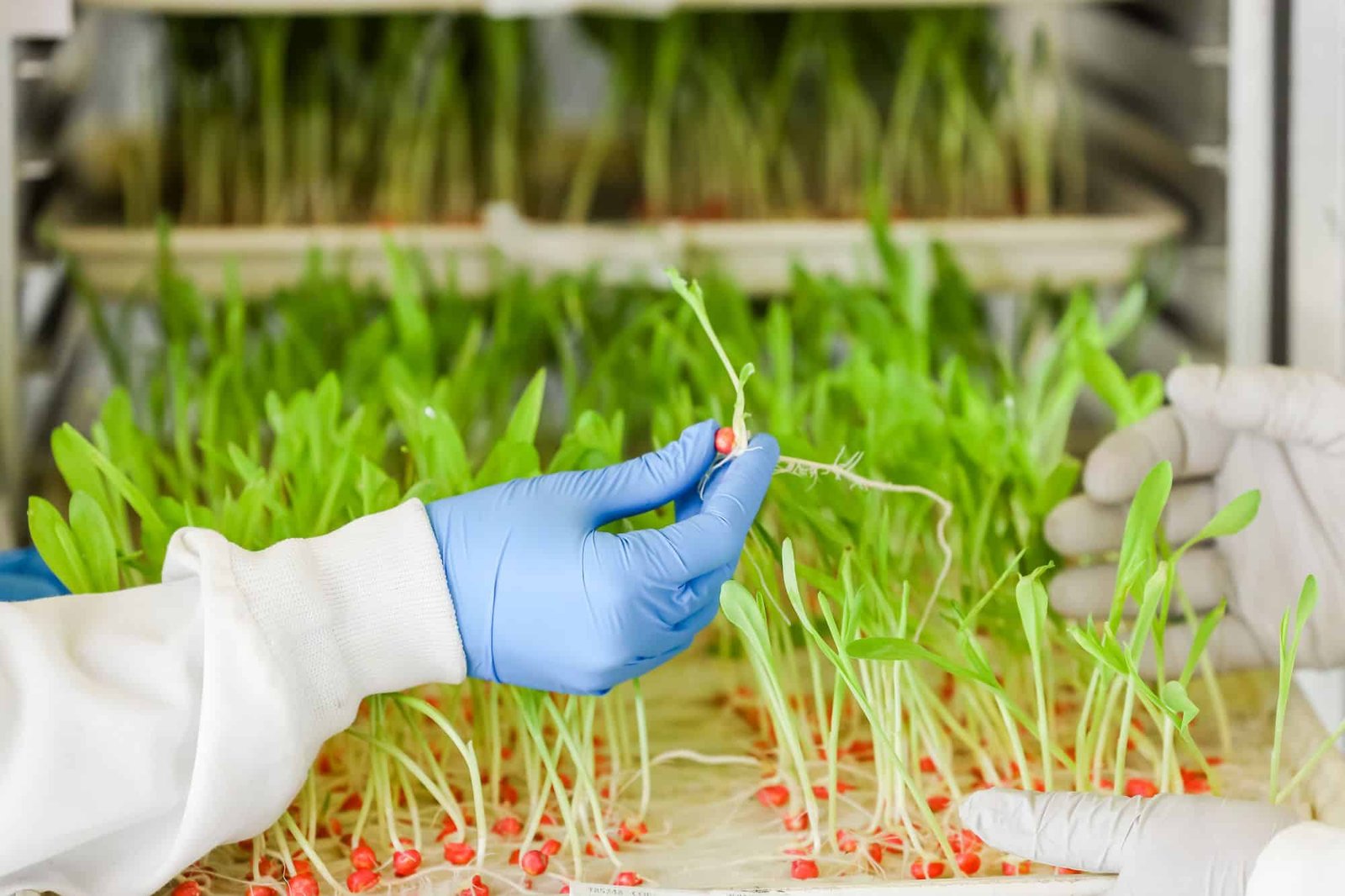
I'd be cautious about putting a precise number on readiness, because "prepared" means very different things depending on where you sit in the supply chain. What I can say is that the gap isn't usually at the top of the chain as the large processors and exporters have generally invested in the systems and know what's being asked of them. The gap is upstream, at the smallholder and small-collector level, where land parcels often aren't formally mapped, ownership records are informal, and there's no existing digital infrastructure to plug into.
For rubber specifically, this is a bigger problem than for wood, because rubber supply chains run through an enormous number of smallholder tappers, often several layers removed from the exporter through local collectors and traders. Getting a verifiable geolocation point that traces back to an individual plot, at that scale, is the hard part.
We often talk about technology as the solution, yet implementation remains the industry's biggest challenge. Why do so many supply chains still struggle to achieve traceability despite the availability of digital tools and platforms?
This is because, the technology was never really the bottleneck but trust and behaviour change were. You can hand a smallholder farmer a GPS-enabled app, but if nobody has explained why they should spend twenty minutes mapping their plot, or if they're worried the data will be used against them somehow, adoption stalls. Traceability tools fail in the field, not in the server room.
The other honest answer is fragmentation. A lot of companies have bought point solutions. One tool for mapping, another for supplier onboarding, another for compliance reporting that don't talk to each other. So you end up with data sitting in silos, and "traceability" on paper but not an actual verifiable, auditable chain. Real end-to-end traceability requires the field data collection, the supply chain mapping, and the compliance reporting to sit on one connected system, otherwise you're just digitizing the same disconnected process you had before.
Buyers are increasingly demanding geolocation data, supplier mapping and auditable sourcing records. Are we witnessing the emergence of a new global procurement standard where transparency becomes as important as price, quality and delivery?
I think we're already there, not just witnessing it emerge. Procurement teams at major buyers now have traceability documentation as a pass/fail gate before price negotiation even starts. That's a fundamental change from five years ago, when traceability was a nice-to-have that might tip a decision between two similarly priced suppliers.
What's interesting is this isn't staying confined to EU-bound trade. Once a buyer builds traceability into its procurement standard for one market, it tends to apply the same standard globally, because running two different sourcing systems is more expensive than running one. So exporters who build proper traceability infrastructure for EU compliance are finding it pays off with buyers in other markets too. It becomes a baseline expectation, not a regional compliance cost.
Smallholders sit at the heart of most forest-risk commodity supply chains. How can the industry ensure that stricter compliance regimes do not unintentionally exclude small producers from global markets?
This is the question that keeps me up at night, honestly, because it's the real risk of EUDR-style regulation if implemented badly. If compliance costs and complexity get pushed straight down to individual farmers without support, you exclude exactly the people the regulation is supposed to protect. Smallholders get dropped from supply chains because it's cheaper for buyers to source from large plantations that are already mapped.
The industry has to treat inclusion as a design requirement, not an afterthought. That means the cost of mapping and monitoring needs to be absorbed higher up the chain (by exporters, processors, and buyers) not passed down to a farmer earning a few dollars a day. It also means building tools that work for someone with a basic smartphone and limited digital literacy, in their own language, not systems designed for a compliance officer in a head office. And critically, it means pairing traceability with real value — training, access to finance, premium pricing for verified compliant produce — so smallholders see participation as opportunity, not just a new burden imposed on them.
Beyond avoiding regulatory penalties, what tangible commercial advantages are companies seeing from investing early in traceability infrastructure? Are there examples where transparency is already creating competitive differentiation?
The companies that moved early aren't just compliant, they're first in line when buyers reallocate sourcing away from suppliers who can't meet the new bar. That's the biggest tangible advantage — not a marketing story, a market-share story. When a buyer has to choose which suppliers survive a tightening regulatory environment, the ones with clean, auditable data win the allocation, full stop.
There's also a financing angle that doesn't get talked about enough. Verified, traceable supply chains are increasingly attractive to lenders and investors looking at ESG-linked financing, because the data de-risks the investment. Companies with strong traceability infrastructure are finding it easier to access better lending terms, because they can actually prove the claims behind their sustainability commitments instead of just asserting them.
The next wave of traceability is likely to involve AI, satellite monitoring, predictive analytics and real-time supply chain intelligence. Which technologies do you believe will have the greatest impact over the next five years, and why?
Satellite monitoring paired with AI-driven deforestation alerts is the one I'd bet on first, because it solves the monitoring-at-scale problem that no amount of manual auditing ever could. You can't send a human to physically verify millions of smallholder plots every year but you can run continuous satellite analysis that flags land-use change against a baseline, and only send people to investigate the exceptions. That's the difference between traceability being a once-a-year compliance exercise and an ongoing, living system.
Predictive analytics is the less obvious but equally important one. Right now most compliance work is reactive — something goes wrong, you find out, you scramble. The real value over the next five years is shifting to predictive risk scoring: flagging which regions, which suppliers, which commodity flows are at elevated risk of non-compliance before it happens, so companies can intervene early rather than losing a shipment at the border. That's where traceability data stops being a reporting artifact and starts being a genuine management tool.
Many companies still view compliance as a cost center. How do you convince CEOs and boards that traceability should be treated as a strategic investment rather than a regulatory expense?
I don't try to win that argument on principle, I win it on numbers. I ask what percentage of their revenue currently depends on markets that are tightening traceability requirements. The EU soon, but increasingly others. Once a CEO sees that traceability infrastructure protects a defined slice of revenue, it stops being a line item and starts being risk management.
The other argument that lands well in the boardroom is optionality. Once you have clean, verified supply chain data, it opens doors you didn't build the system for: better sustainability reporting, better financing terms, premium buyer relationships, faster onboarding with new customers who no longer need to run their own lengthy due diligence because your data already answers their questions. Compliance is the floor. The strategic value is everything the data lets you do once you have it.
Looking ahead to 2030, do you envision a future where every agricultural, forestry and commodity product carries a verifiable digital identity from origin to consumer? What will the global trading system look like if full traceability becomes the norm rather than the exception?
I think we're heading there, though I'd be careful about promising every single product by a fixed date — regulation and infrastructure move at different speeds in different markets. What I do think is close to inevitable is that "verifiable digital identity" becomes the expectation for any commodity crossing a border into a regulated market, the same way a passport is now assumed for a person, not an unusual extra step.
If that becomes the norm, the trading system changes in a fairly fundamental way: trust stops being negotiated through relationships and paperwork audits, and starts being verified through data that both sides can independently check. That should actually make trade faster and cheaper for compliant players, because a lot of the friction in commodity trade today exists precisely because buyers can't easily verify claims and have to build in cost and delay to manage that uncertainty. The companies that build this infrastructure now aren't just preparing for a compliance deadline — they're positioning themselves for a trading system that runs on verified data as the default currency of trust.
-- Suchetana Choudhury (suchetana.choudhuri@agrospectrumindia.com)