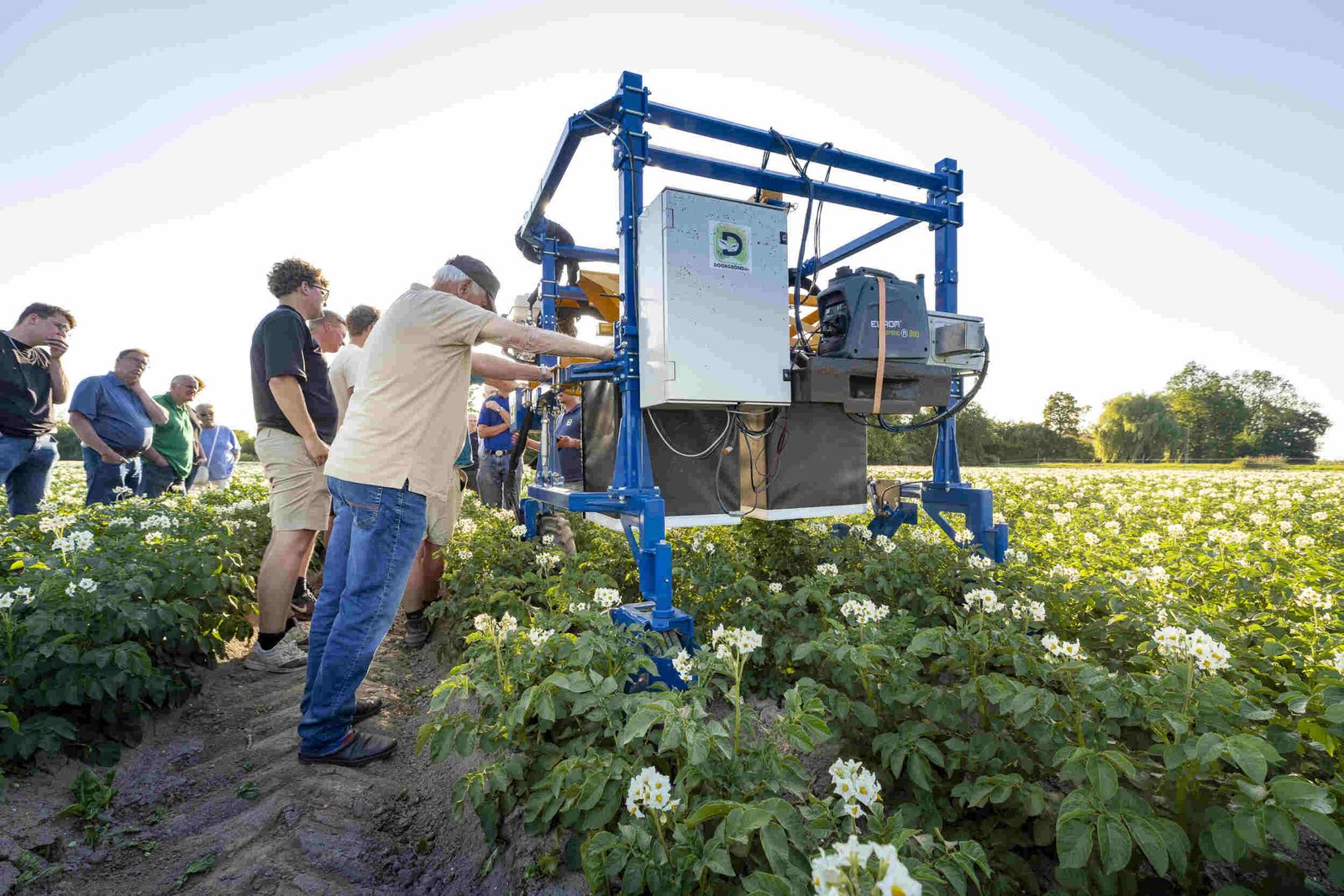
Picture the marketing reel for an autonomous tractor: a driverless machine pulling a wide implement across a field so large the horizon is the only boundary. Now picture a rice paddy in the Mekong Delta, a vegetable terrace in Java or a sugarcane block in Maharashtra. The paddy is bunded on all four sides. The terrace is reached by a footpath. The sugarcane block belongs to three brothers who farm it as separate strips. The reel and the reality do not meet.
That gap is the central puzzle of farm machinery in Asia-Pacific. Most of the world’s farms are small, and most of the world’s small farms are in Asia. The Food and Agriculture Organization has long estimated that farms of under two hectares make up the large majority of farms worldwide while working only a small share of farmland, and the heaviest concentration of those holdings is in South, Southeast and East Asia. India’s last fully published Agriculture Census, for 2015 to 2016, put the average operational holding at about 1.08 hectares, with small and marginal farmers accounting for roughly 86 per cent of holdings. Across China, Vietnam, Indonesia and the Philippines, household plots of well under a hectare are common.
Yet Asia is not waiting for machinery to shrink to fit. Something more interesting is happening. The region is mechanising around the tractor rather than through it, with spray drones, hire-and-share business models and compact autonomous machines doing the work that a generation of large equipment never reached. As the industry heads to Agritechnica Asia in Ho Chi Minh City in March 2027, the question worth asking is whether Asia’s smallholders can skip a generation of machinery altogether, much as many of them skipped the landline and went straight to the mobile phone.
The autonomy the majors are building, and who it is for
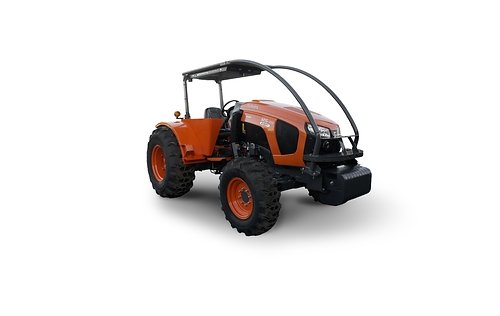
Start with what the global machinery majors are actually shipping, because it tells you where the money is going. Kubota, the Japanese group that is among the most Asia-rooted of the big manufacturers, has spent 2026 widening its autonomy push. At CES in January it showed an autonomous version of its narrow M5 tractor developed with Agtonomy, the California-based autonomy software company. This autumn the two companies announced an autonomous M5L for specialty crops, with orchard availability reported for 2027.
The target customer is telling. These are tractors for vineyards, orchards and nurseries in markets where labour is scarce and expensive, the rows are regular, and a single operator can supervise several machines from a tablet. They are a sensible product for California or Australia. They are a harder sell on a two-hectare mixed farm in Isan.
Japan is the important exception, and it shows what autonomy needs to work in Asia. Kubota and Yanmar have sold supervised robot tractors at home for several years, and in August 2026 Kubota said it would launch unmanned autonomous tractors with remote monitoring, which media reported as a Japanese first, from April 2027. The logic is demographic. Japan’s farmers are among the oldest in the world, and as they retire, land is being pooled into larger farm businesses. Hokkaido, where holdings are many times the national average, is the natural proving ground. Japanese autonomy, in other words, is arriving where consolidation has already happened. It is a reward for scale, not a substitute for it.
That matters for the rest of the region. In China, India and Southeast Asia, land consolidation is happening, but slowly and unevenly. Policy can encourage leasing and cooperative farming, yet it cannot quickly undo inheritance patterns that have split land for generations. For most Asian farmers in 2027, a full-size autonomous tractor will remain an answer to someone else’s question.
Drones: the machine that fits the plot
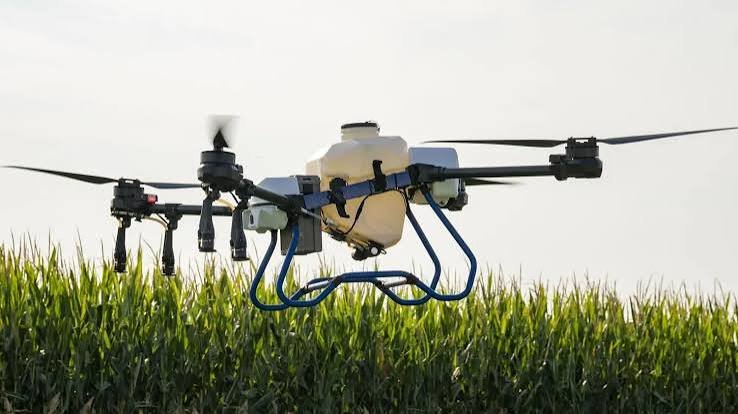
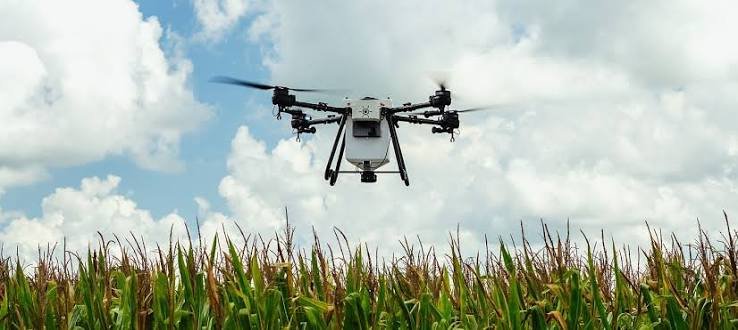
If there is one technology that has cracked the small-plot problem, it is the agricultural spray drone. A drone does not care about bunds, field shape or soft soil. It can be carried on a motorbike, it treats a hectare in minutes, and it keeps the operator out of a cloud of pesticide.
China shows how far this can go. Official figures reported in early 2026 put the number of agricultural drones in operation in China at more than 300,000. Analysis published in September 2026 estimated that China does roughly 30 times as much agricultural drone work as the United States, where the drone-treated area has itself grown to about 6.6 million hectares. Two Chinese companies dominate global supply: DJI, through its agriculture division, and Guangzhou-based XAG. DJI’s own annual reporting tracks the trend. Its 2025 report put the global fleet of its agricultural drones at about 400,000, and its 2026 report says more than 600,000 are now in use. The company also claims large cumulative savings in water and carbon emissions compared with conventional spraying, figures that are self-reported but point in a consistent direction.
The spread into Southeast Asia has been just as striking, if from a lower base. DJI said in 2025 that its agricultural drone sales in Thailand had grown 50-fold over seven years, with rice and sugarcane the main crops. In Vietnam, drones have become a familiar sight in the Mekong Delta rice belt, where local operators sell spraying by the hectare. Industry estimates put the national fleet in the low thousands, and Vietnamese state media has reported both the productivity gains and the remaining problems: patchy training, unclear rules on which chemicals can be applied from the air, and drift complaints from neighbouring plots.
The Philippines is moving from pilots to programmes. The Department of Agriculture has funded free aerial spraying and seeding services for rice farmers in provinces such as Iloilo, set aside funds for drone operations against sugarcane pests, and in September 2026 signalled a wider drone rollout for rice in 2027. The International Rice Research Institute has run demonstrations of drone-assisted rice farming for growers in Laguna. Indonesia is taking a more industrial-policy route: in July 2026 the Ministry of Agriculture commissioned Hasanuddin University in Makassar to produce agricultural drones worth about Rp11 billion for distribution to 46 regions, alongside imports from Chinese suppliers.
India has added a social dimension. The Namo Drone Didi scheme, approved in late 2023, aims to provide 15,000 drones to women’s self-help groups, who then sell spraying services to farmers in their villages. Delivery has been slower than the headline target, and the government has had to work through questions of pilot training, repair networks and whether there is enough paid work to keep each drone busy. But the design is the important part. India is not trying to put a drone on every farm. It is trying to put a drone service within reach of every farm.
Machinery as a service: the real Asian innovation
That idea, ownership by the few and access for the many, is the thread that ties Asia’s mechanisation together. It is less glamorous than autonomy, but it may be the region’s most important contribution to farm technology.
India has institutionalised it. Under the Sub-Mission on Agricultural Mechanisation, the central government and the states have subsidised tens of thousands of custom hiring centres, run by cooperatives, farmer producer organisations, entrepreneurs and village groups, which rent tractors, rotavators, seed drills and harvesters by the hour or the acre. Government statements in 2026 credited the mission with distributing more than 21 lakh machines, about 2.16 million, to farmers and hiring centres. Some states have added phone apps that work like ride-hailing for farm equipment.
The same model runs informally across the region. In the Mekong Delta, combine harvester crews follow the rice harvest from province to province. In Thailand, contractors with drones and harvesters move between sugarcane and rice. In China, specialised service companies now plough, plant, spray and harvest for millions of households under contract, a system Chinese policymakers explicitly promote as a way to modernise without forcing consolidation.
The economics explain why this works. A small farmer cannot justify buying a combine that sits idle for 50 weeks a year. A service operator who runs that combine across hundreds of farms can. Drones fit this model even better, because they are cheap enough for a village entrepreneur, fast enough to cover many plots in a day, and simple enough to learn in weeks. Over time, the service operator, not the farmer, becomes the machinery industry’s real customer in Asia. That has big implications for how manufacturers design, finance and support their products.
Compact machines and robots for high-value crops
Between the drone and the big tractor sits a third category: compact and specialised machines, increasingly with some autonomy, for high-value crops. Here Asia’s small plots are less of a barrier, because the crops are valuable enough per hectare to justify the spend.
Japan is again the laboratory. Start-ups have developed robots for jobs that are hard to staff, such as HarvestX’s indoor strawberry pollination robots and inaho’s asparagus-harvesting robot, often offered on a pay-per-use basis rather than an outright sale. Greenhouse and vertical farm operators in Japan, South Korea, China and Singapore are adopting automated climate control, conveyor systems and robotic handling, because a protected environment is far easier to automate than an open field.
Narrow autonomous tractors such as Kubota’s orchard models also point to a future in Asian tree crops. Durian in Thailand and Vietnam, coffee in Vietnam’s Central Highlands, and apples in Himachal Pradesh and Shandong all grow in rows, carry high value per tree and face tightening labour supply. These are realistic early markets for compact autonomy in the region, probably first among large estates and corporate growers, then through service providers.
What works at what farm size
Put the pieces together and a pattern appears. Technology adoption in Asian agriculture is driven less by farm size alone than by the match between farm size, crop value and access model. The matrix below is AgroSpectrum Asia’s editorial assessment, based on the adoption evidence above.
Table: Farm size versus technology fit in Asia-Pacific (AgroSpectrum Asia editorial rating)
|
Technology |
Under 1 ha |
1 to 5 ha |
5 to 50 ha |
Over 50 ha |
Main access model |
Leading Asian markets |
|
Spray and seeding drones |
High, via service |
High, via service |
High, owned or hired |
Medium, often aircraft or large booms |
Pay-per-hectare operators |
China, Thailand, Vietnam, India |
|
Custom-hired tractors and harvesters |
High |
High |
Medium |
Low |
Hiring centres, roving crews |
India, Vietnam, China |
|
Compact and walk-behind machinery |
High |
High |
Low |
Low |
Ownership |
Indonesia, Philippines, Vietnam |
|
Narrow autonomous tractors |
Low |
Low to medium, high-value crops |
High, orchards and estates |
High |
Ownership or dealer lease |
Japan, emerging in Thailand, Vietnam |
|
Full-size autonomous tractors |
Low |
Low |
Medium |
High |
Ownership |
Japan (Hokkaido), parts of north-east China |
|
Harvest and pollination robots |
Low |
Medium, protected cropping |
Medium |
Medium |
Pay-per-use or subscription |
Japan, South Korea, China |
The ratings show why the “skip a generation” question needs a careful answer. Asia’s smallholders are not skipping mechanisation. They are skipping ownership. The farmer with half a hectare in Vietnam may never own a tractor, but the field will still be ploughed, sprayed and harvested by machines, increasingly smart ones, run by someone else.
Agritechnica Asia and the road to scale
This is the backdrop for Agritechnica Asia, the DLG-organised machinery show scheduled for 17 to 19 March 2027 at the Saigon Exhibition and Convention Center in Ho Chi Minh City. Holding the show in Vietnam is itself a signal: the country is one of Southeast Asia’s fastest mechanising farm economies, a major rice and coffee exporter, and a test market for nearly every model described above.
Visitors should look past the shiniest tractors and ask harder questions. Can manufacturers build machines and financing products around service operators rather than individual farmers? Will drone makers and regulators agree common rules on aerial application, pilot licensing and data? Can compact autonomy reach a price that a Thai durian grower or an Indian farmer producer organisation can justify? And who will maintain all this equipment in rural districts far from a dealer?
The answer to the headline question is a qualified yes. Asia’s smallholders will largely skip the era of every farmer owning a big tractor. What replaces it is a layered system of drones, shared machines and specialised robots, reached through services rather than showrooms. That is not a lesser version of Western mechanisation. For a region of fragmented holdings, it may be the better one.
What to watch in 2027
- Whether Kubota’s remotely monitored unmanned tractors launch in Japan on schedule in April 2027, and how quickly farm businesses in Hokkaido take them up.
- Progress on India’s Namo Drone Didi target of 15,000 drones, and whether self-help groups can earn enough from spraying to keep each drone busy.
- The Philippine Department of Agriculture’s planned 2027 drone rollout for rice, and whether it moves from free government services to paid private operators.
- Southeast Asian rules on aerial pesticide application and drone pilot licensing, which will decide how fast the spraying market can scale.
- Deals and launches at Agritechnica Asia in March 2027 that target service operators and farmer groups rather than individual buyers.
- Whether Indonesia’s locally produced agricultural drones reach farmers at a scale that can compete with Chinese imports.