Brazil’s biologicals market continued to expand in the first half of 2026, with both sales and treated acreage increasing, but regulatory delays are raising concerns over the sector’s ability to convert market growth into greater industrial competitiveness. According to data released by CropLife Brasil, the Brazilian biologicals market generated BRL 1.82 billion in the first six months of 2026, up 9.6 per cent from the same period last year. Treated acreage reached 46.2 million hectares, an 18.3 per cent increase year on year.
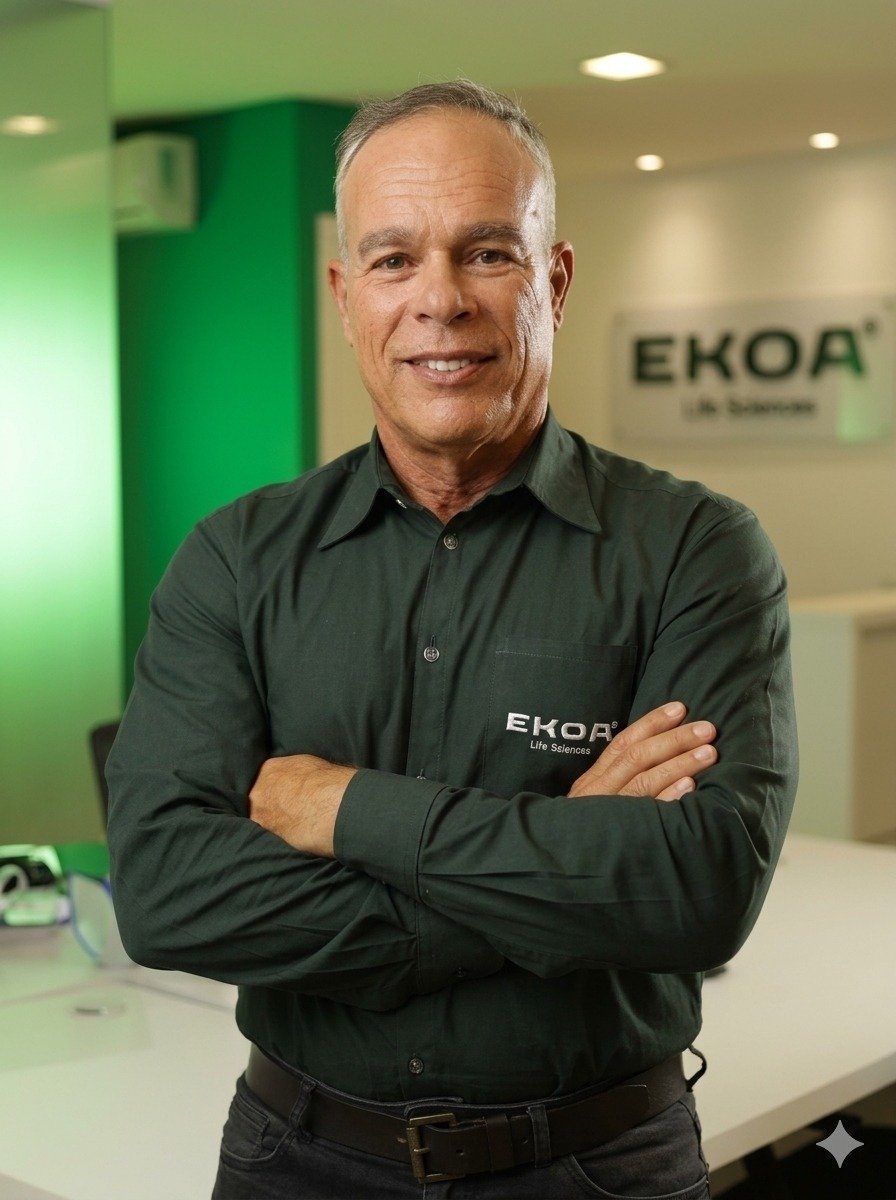
The stronger growth in treated acreage compared with market value indicates that biological products are gaining broader adoption across Brazilian agriculture, according to Mauro Heringer, International Relations Director at the Brazilian Association of Biological Inputs Industries (ABINBIO) and Co-founder of EKOA Life Sciences. “The figures for the first half of 2026 confirm the expansion of biologicals in Brazil, but they also expose the economic and strategic cost of delays in regulating Law 15,070/24,” Heringer said.
Bioinsecticides led the market’s expansion, particularly driven by Brazil’s second corn crop. Bionematicides and biofungicides also advanced as farmers prepared for the soybean planting season. Inoculants recorded significant growth in treated acreage, reflecting their strong correlation with soybean production, although the increase in area was not matched by the same rate of growth in commercial value.
“The sector’s picture is clear: there is demand, adoption, growing agronomic confidence and a market,” Heringer said. However, the executive said the market’s growth should not be viewed solely as a success story. As of September 24, Brazil had registered 61 new biological products with active registrations. At the same time, the average approval period reportedly increased in 2026 to approximately 20 months for biological products and 16 months for biological/organic products, compared with the previous year.
“The Brazilian biologicals market is growing despite institutional delays, rather than because of a fully functional regulatory environment,” Heringer said. Law 15,070/24 established Brazil’s new legal framework for biological inputs, recognizing the sector’s specific technical and economic characteristics. Its full implementation, however, still depends on regulation. According to Heringer, the regulatory gap can contribute to interpretative uncertainty, higher compliance costs, reduced investment predictability and delays in regulatory pipelines.
“The bottleneck for the sector today is not agronomic acceptance of biologicals; it is the institutional conversion of that acceptance into a stable and scalable competitive environment,” he said. Heringer also emphasized that biological innovation reaches the market only after companies have made substantial investments in research, field validation, regulatory compliance and technical documentation. These processes are required before products can move through official systems such as Agrofit and SISPA.
“An intelligent regulatory environment does not hinder innovation; it organizes and accelerates it, converting it into competitiveness, productivity and a lower Cost of Brazil,” Heringer said. The regulatory issue also has implications for Brazil’s position in the global biologicals industry. As biological technologies expand internationally, competition increasingly involves not only products and agronomic performance, but also regulatory efficiency, industrial capacity and the ability to transform scientific research into commercial technologies.
“Brazil needs to be a major developer, formulator, registrant and exporter,” Heringer said. For the ABINBIO executive, the first-half figures should therefore be interpreted as both evidence of market maturity and a signal that the regulatory framework needs to evolve at the same pace as adoption. “Yes, the sector has grown. Yes, treated acreage has increased significantly.
Yes, Brazilian agriculture is demonstrating that it recognizes the technical value of biologicals. But precisely because of this, the country should be doing more — and doing better — on the regulatory front,” Heringer said. He argued that implementing Law 15,070/24 goes beyond an administrative agenda and could influence the future competitiveness of Brazil’s biological inputs industry. “It is an industrial policy decision. It is a competitiveness decision. It is a decision about who will capture value in the next generation of agriculture,” Heringer concluded.