French deeptech startup Genomines has raised $45 million in Series A funding to scale its plant-based approach to nickel extraction, betting that agriculture and biotechnology could open up new sources of a metal increasingly important to the global battery and industrial economy.
The Paris-based company’s latest funding round comprises $37 million in equity and $8 million in debt. It was led by US-based VC Engine Ventures and European biotech investor Forbion BioEconomy, with participation from Deeptech & Climate Fonds, Wind Capital, Lowercarbon Capital, AlphaTech Investment Group and Entrepreneurs First. Carmaker Hyundai and mining-focused investor Prospect Innovation also joined the round. Genomines is developing genetically enhanced plants that can absorb and concentrate nickel from soil. The approach is designed for deposits where nickel exists close to the surface but at concentrations too low for conventional mining to be economically viable.
Turning Plants into Nickel Collectors
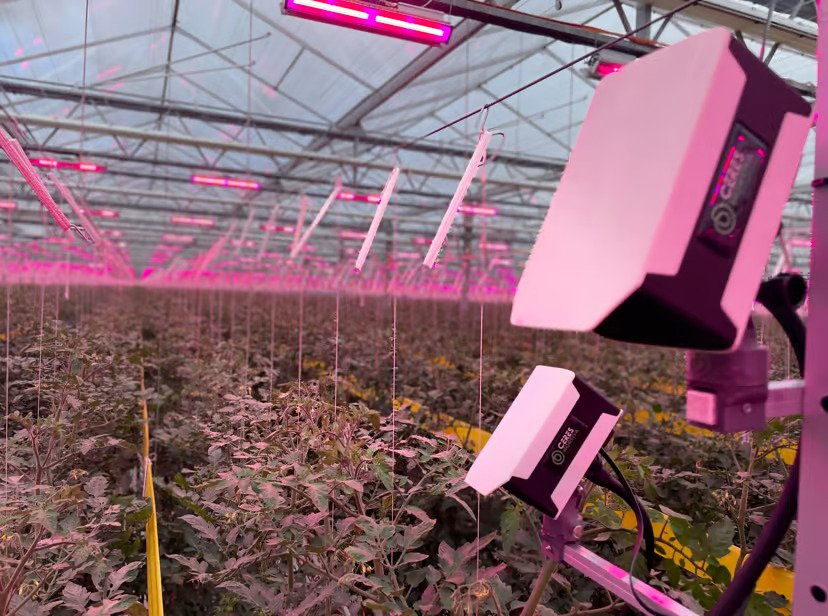
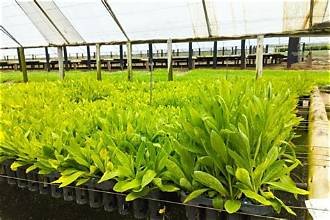
The technology builds on a natural phenomenon known as phytomining, in which certain plants absorb metals through their roots and accumulate them in their tissues. Genomines is modifying plants to increase their capacity to capture nickel, including by increasing plant height and leaf size. The startup has also developed a specialised soil designed to improve nickel uptake.
The resulting process is intended to access shallow deposits without the large-scale infrastructure typically associated with conventional mining.
Genomines co-founder Fabien Koutchekian estimates that between 30 million and 40 million hectares of deposits globally could potentially be exploited using the technology. Once scaled, he says, the approach could increase annual nickel production by seven- to 14-fold. The company is positioning the technology not as a substitute for nickel itself, but as an alternative route to producing the same industrial commodity.
Nickel Supply Meets the Energy Transition
Nickel is widely used in stainless steel and has gained strategic importance in the automotive industry because of its role in some battery chemistries. Global nickel production is also geographically concentrated, with Indonesia accounting for more than half of global output, according to the startup.
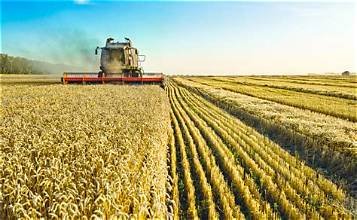
That concentration has increased interest among industrial users and automakers in securing alternative supply sources. Genomines argues that its model could offer a different economics from conventional mining. Traditional mines can require billions of dollars of upfront investment and take more than a decade before production begins, while the company believes its process could be economically viable across a roughly 200-hectare surface area. The model is deliberately framed around the convergence of agriculture and mineral extraction: grow plants, harvest the nickel-rich biomass and then recover the metal through a comparatively simple extraction process.
From Kilograms to Tonnes
The technology remains at an early commercial stage. Genomines is currently developing its process on experimental land in South Africa and has produced only a few hundred kilograms of nickel so far. The new capital will be used to scale production towards several hundred tonnes of nickel in the coming years.
The startup is also working with automakers including Hyundai and Jaguar Land Rover, whose supply chains require access to nickel. Revenue remains limited at present, with Genomines expecting the business to reach several million dollars in annual revenue over the next three to five years.
Scaling Will Test the Business Model
The central commercial challenge is no longer simply demonstrating that plants can accumulate nickel. Genomines must show that the resulting metal can be produced at a cost that is competitive with conventional sources and in volumes large enough for industrial customers. That will require the startup to move from experimental production measured in kilograms to an industrial model capable of delivering hundreds of tonnes and eventually much larger volumes.
Genomines is not alone in pursuing plant-based metal extraction. French startup Econick, for example, entered a joint venture with stainless steel producer Aperam in 2023 to develop plant-based nickel production. Its proposition is therefore less about creating a new nickel product than changing how and where nickel can be extracted. If the technology can achieve commercial scale, it could turn marginal mineral deposits into agricultural production systems—and add biotechnology and farming to the toolbox for securing critical mineral supply.