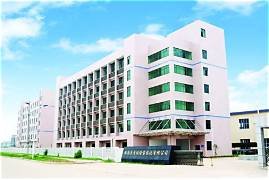
Hunan Haili Chemical Industry Co., Ltd. has approved a project to build an intelligent green pesticide-formulation production facility with annual capacity of 4,000 tonnes. The project will be implemented by controlled subsidiary Haili Guixi New Material Technology Co., Ltd. at its existing site in the Sulphur-Phosphorus Chemical Base in Guixi City, Yingtan City, Jiangxi Province. The planned investment is RMB 22.7967 million, equivalent to approximately US$3.36 million, and will be financed entirely by Haili Guixi.agfunder+1
Construction is expected to take nine months.
The project is designed to expand Haili Chemical’s formulation capacity rather than establish a new upstream active-ingredient manufacturing base. It will create separate solid and liquid formulation lines, allowing the company to convert active ingredients into finished products for agricultural use.
The solid line will be configured for alternating production of 85 per cent carbaryl wettable powder and 70 per cent thiophanate-methyl wettable powder. The planned annual capacity is 1,000 tonnes of 85 per cent carbaryl WP and 1,000 tonnes of 70 per cent thiophanate-methyl WP. The liquid line will produce 50 per cent thiophanate-methyl suspension concentrate, with annual capacity of 2,000 tonnes. The combined planned capacity will be 4,000 tonnes per year.
The use of a shared solid-formulation line is intended to provide production flexibility. By alternating between carbaryl and thiophanate-methyl products, the facility can potentially adjust output according to market demand, product orders and raw-material availability. The liquid line will operate separately to produce suspension concentrate, a formulation in which finely milled active ingredients are dispersed in a liquid medium. The format is designed to provide a ready-to-use agricultural product with controlled concentration and application characteristics.
Extending the agrochemical chain
The project will extend Haili Chemical’s agrochemical value chain towards downstream formulations. Haili Chemical is recognised as a major domestic producer of carbamate insecticides. Its existing business includes pesticide research, production and sales, as well as chemical products and new-material technology development. The new facility will allow the group to strengthen its connection between active-ingredient production and finished agricultural formulations. That can give the company greater control over product specifications, packaging, customer requirements and distribution.
Downstream formulation capacity may also improve the company’s ability to serve regional and export markets. Formulation plants can adapt product concentrations and physical forms to meet different crop-protection requirements, registration conditions and customer preferences. The investment also addresses a gap in Haili Chemical’s existing industrial chain. The company has established expertise in carbamate insecticides, but additional formulation capacity can help it capture more value after the production of technical-grade active ingredients.
Haili Guixi background
Haili Guixi New Material Technology Co., Ltd. was established in February 1997 and has registered capital of approximately RMB 192 million, equivalent to about US$28.28 million. Its business scope includes the production and sale of pesticides, the production and sale of chemical products and the promotion of new-material technologies. The Guixi facility is located in the Sulphur-Phosphorus Chemical Base in Guixi City, Jiangxi Province. The site forms part of Haili Chemical’s broader production network and supports the company’s strategy of developing coordinated agrochemical and chemical-materials operations.
Haili Chemical, listed in Shanghai under stock code 600731, has production bases and related operations across Hunan, Jiangxi and Ningxia. The company has been expanding its agrochemical portfolio through both upstream active-ingredient projects and downstream formulation investments.
Product strategy
Carbaryl and thiophanate-methyl serve different crop-protection functions. Carbaryl is a carbamate insecticide used against a range of agricultural pests in markets where it is registered and permitted. Thiophanate-methyl is a fungicide used to control fungal diseases in crops and is commonly supplied in both wettable-powder and suspension-concentrate formulations. The project’s product mix enables Haili Guixi to serve both insecticide and fungicide markets. The inclusion of two formulation types for thiophanate-methyl also provides flexibility in product design.
Wettable powders are dry formulations that are mixed with water before application. Suspension concentrates are liquid formulations containing dispersed active-ingredient particles. Their manufacture involves different process, quality-control, storage and packaging requirements. The project’s “intelligent” production positioning suggests the use of automated dosing, process monitoring, equipment control, formulation management and quality tracking. The investment announcement does not provide a full technology specification, so the precise automation architecture and expected efficiency gains remain to be disclosed.
Commercial rationale
Haili Chemical said the project is intended to enrich its product portfolio, extend its agrochemical industrial chain and create new profit-growth opportunities.agfunder The investment is relatively small compared with a large greenfield chemical complex, but it is strategically relevant because formulation capacity can support higher-value sales and improve the utilisation of existing technical materials.
The project can also help the company respond more quickly to market demand. A shared production line gives Haili Guixi the ability to adjust output between carbaryl WP and thiophanate-methyl WP, subject to cleaning, quality-control and regulatory requirements. However, the commercial benefits will depend on capacity utilisation, product registration, pricing, raw-material costs and market demand. Additional formulation capacity does not automatically result in higher margins if the market is oversupplied or if competition forces prices down.
The project will also need to comply with pesticide-registration requirements in the markets where the products are sold. Formulation concentration, label claims, packaging and permitted uses may differ between jurisdictions.
Regulatory and execution considerations
The nine-month construction period indicates that the project is expected to be implemented relatively quickly. This may be possible because it is located within an existing chemical-production base and involves formulation rather than a complex new synthesis route. The company will still need to complete engineering, procurement, construction, equipment installation, process validation, commissioning and relevant environmental and safety procedures.
Formulation operations must manage dust, solvent or liquid handling, product residues, packaging waste, wastewater and cross-contamination risks. The shared solid line will require stringent cleaning and changeover procedures to ensure that residues from one product do not affect the next production campaign. Quality control will be important because the products have different active ingredients, concentrations and formulation characteristics. The facility will need appropriate testing for active-ingredient content, particle size, suspension stability, moisture, wetting properties, storage stability and packaging integrity.
The project’s environmental performance will also depend on the design and operation of dust-control, wastewater-treatment, solid-waste and hazardous-material systems. Its location within an industrial base may provide access to common infrastructure, but the subsidiary remains responsible for compliance with applicable standards and approvals.
Position within Haili’s expansion strategy
The formulation project forms part of a broader expansion strategy by Hunan Haili. The group has been strengthening its agrochemical production network and pursuing new investment opportunities. The Guixi project complements more capital-intensive upstream initiatives by adding downstream capacity at a relatively modest investment cost.
This combination of upstream technical production and downstream formulation can help Haili Chemical build a more integrated agrochemical platform. It may also reduce reliance on external formulation partners and improve the company’s ability to commercialise its active ingredients.
The project could become particularly valuable if Haili Chemical can combine technical expertise, formulation capability, registration resources and distribution networks. Its performance will depend on the company’s ability to convert installed capacity into profitable product sales. The approval of the 4,000-tonne-per-year intelligent green pesticide-formulation facility marks another step in Haili Chemical’s agrochemical-chain expansion.
By investing RMB 22.8 million in Haili Guixi, the company is seeking to strengthen formulation capacity for carbaryl and thiophanate-methyl while adding flexibility in both solid and liquid products. The project does not represent a large increase in total chemical capacity, but it has strategic importance because it moves the group further downstream. The company will be able to produce more finished formulations, respond to market requirements and potentially retain a greater share of value within the group. The key indicators during execution will be the completion of construction within the planned nine-month period, successful commissioning of the two formulation lines, registration and market acceptance of the products, and the ability to achieve sustainable utilisation and margins.