Brio Hydroponics' FOCO (Franchise-Owned, Company-Operated) model represents an ambitious attempt to reimagine commercial agriculture by combining land ownership, technology, infrastructure, and professional farm management within a single operating framework. Under the model, franchise partners invest in hydroponic infrastructure on a minimum 30-acre land parcel, while Brio assumes end-to-end responsibility for cultivation, operations, market access, and supply chain management—transforming farming into a professionally managed, performance-driven enterprise.
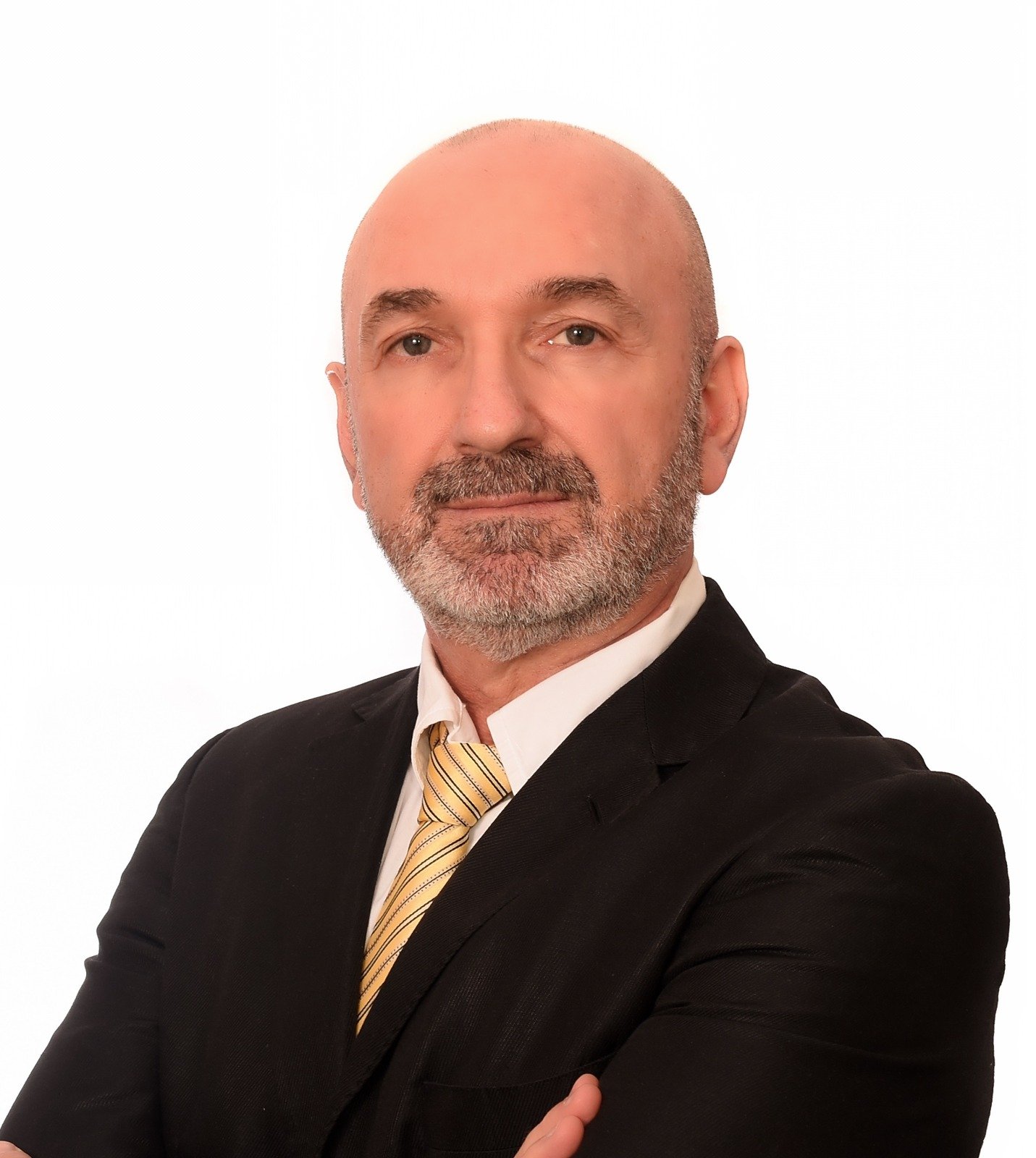
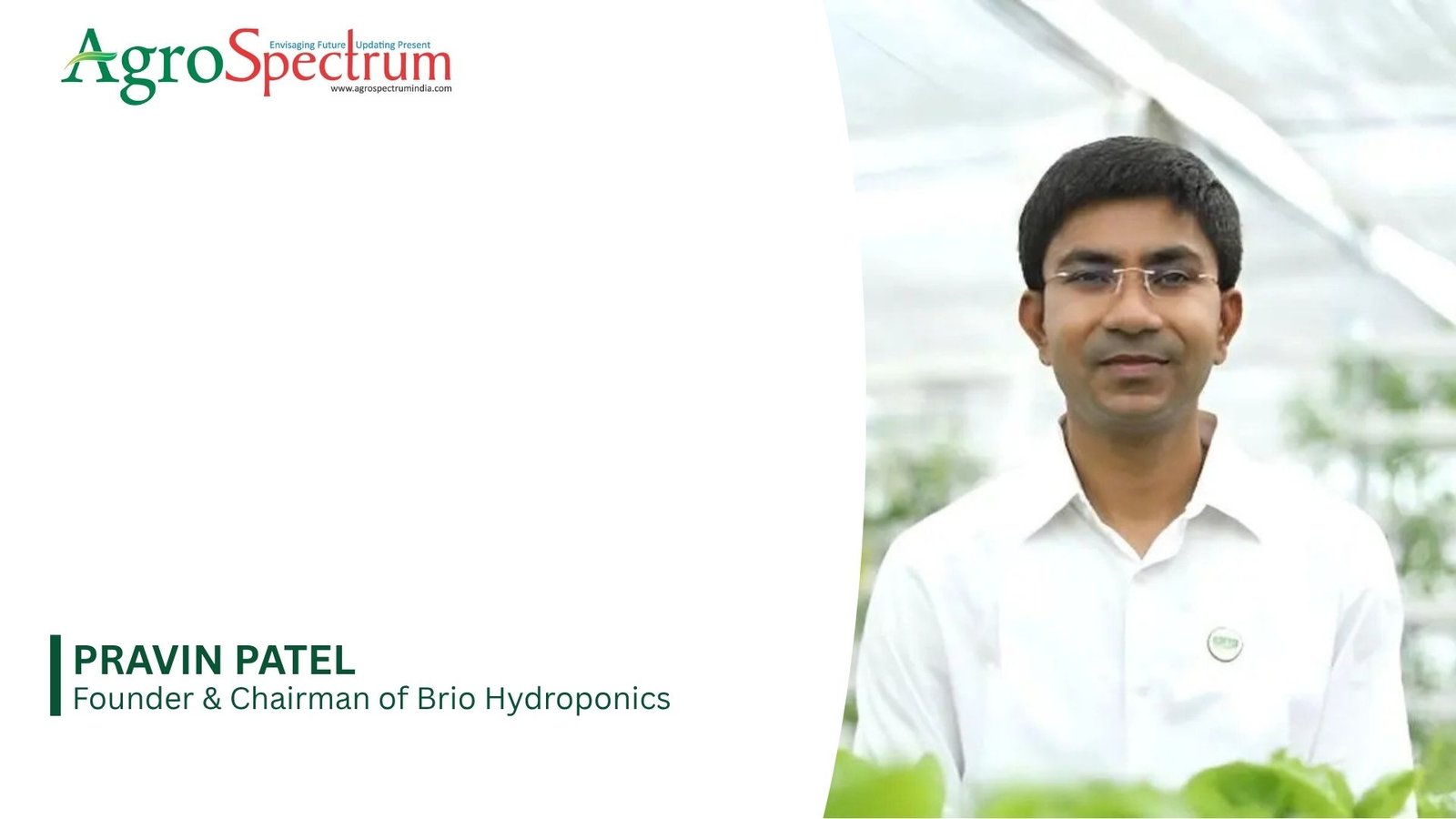
The most compelling interviews are those that challenge ideas rather than celebrate them. That is the premise of this conversation with Pravin Patel, Founder & Chairman of Brio Hydroponics. Instead of accepting hydroponics as the inevitable future of agriculture, the discussion rigorously examines the business model behind it—its economic viability, governance framework, capital intensity, execution risks, and long-term scalability. The questions are designed not to endorse a narrative, but to test its resilience against commercial and operational realities. Patel's responses encourage readers to look beyond the technology and explore a larger shift, where agriculture is increasingly shaped by infrastructure, institutional capital, and disciplined execution. Whether or not one agrees with the proposition, this interview provides a thoughtful framework for understanding how the business of farming is evolving—and what it will take for that evolution to succeed.
Asset-Class Innovation or Rebranding
Does Brio's FOCO model represent a genuine asset-class innovation in agriculture, or is it primarily a rebranding of managed farmland investment under agritech terminology?
The Honest Answer: It Is Both — and Neither Fully
The FOCO model occupies a genuinely new structural space in Indian agriculture. It cannot be fairly dismissed as a rebrand of managed farmland, nor can it claim to be an entirely new financial instrument disconnected from its agricultural roots. The honest characterization is that FOCO is a hybrid infrastructure-operations-investment platform that borrows from managed farmland thinking but restructures the economic engine in a fundamentally different way.
Here is where FOCO diverges meaningfully from conventional managed farmland investment:
What makes it structurally different:
The productive asset is not the land — it is the infrastructure built on it. Traditional managed farmland derives value from soil quality, location, water rights, and appreciation. FOCO's value is derived from the climate-controlled hydroponic structures, operational systems, crop planning, and market access built on top of the land. Land in FOCO is the substrate, not the asset.
Returns are linked to yield density, not land appreciation. FOCO targets 25–30 per cent net returns through operational productivity — six to eight harvest cycles per year, 28+ premium crop varieties, and integrated supply chain access — not through passive land value appreciation over a holding period.
Operations are centralized under a specialist operator. Managed farmland typically involves land management, tenancy, or leasing to farmers. FOCO involves Brio deploying proprietary CEA (Controlled Environment Agriculture) technology, managing crop calendars, running input procurement, and maintaining buyer relationships as a professional agricultural operator.
Investor participation has a defined performance framework. FOCO includes transparent reporting, buyback mechanisms, staged investment structures, and structured yield sharing — closer to an operating partnership than a passive landholding.
Where the comparison to managed farmland does hold:
Land is still central; a 30-acre owned plot is the precondition for the model
Long-duration commitments mean investors are exposed to site-specific constraints
Biological production remains the underlying revenue source — there is no technology that fully eliminates agricultural operating variables
The Asset-Class Argument
For institutional framing purposes, FOCO is best positioned as yield infrastructure — a category closer to operational infrastructure assets (think toll roads, renewable energy parks) than to passive farmland. The return driver is operating performance and asset utilization, not land scarcity or appreciation. As India's hydroponics market grows from $ 263 million in 2024 toward a projected $ 2,227 million by 2035 at a CAGR of 21.43 per cent, the FOCO model is well-positioned to become a legitimate standalone category within India's alternative asset landscape — but only if it consistently demonstrates operational performance over time, not just structural elegance. "Any model that substitutes agritech language for agricultural substance will eventually be exposed by its own yields. FOCO has to be justified by what comes out of those net houses — crop quality, market realization, and investor returns — not by what it is called, " says Pravin Patel, Founder & Chairman, Brio Hydroponics.
Sustainability of 25–30 per cent Net Returns
How sustainable are projected 25–30 per cent net returns in hydroponic farming when benchmarked against input volatility, energy dependency, and price discovery in fresh produce markets?
The Return Thesis: Plausible, Not Guaranteed
Projected net returns of 25–30 per cent are grounded in a legitimate operational logic, but their sustainability depends on how well five key variables are managed: crop mix, realized selling prices, energy costs, infrastructure utilization, and execution consistency across production cycles.
What Supports the Return Thesis
The economics of hydroponics at commercial scale are structurally different from traditional farming in ways that genuinely support elevated returns:
Revenue density: Six to eight production cycles per year per acre, versus one to two cycles for most open-field crops, means the same land and infrastructure generates five to six times more crop output annually
Crop premium: Leafy greens, exotic herbs, coloured capsicums, cherry tomatoes, and specialty cucumbers command 30–60 per cent premiums over equivalent open-field produce in organized retail and HORECA channels
Input efficiency: 90 per cent water savings, reduced pesticide use, and minimized soil amendment costs lower the variable cost base relative to comparable outdoor production
Year-round production: Elimination of weather-driven seasonal gaps removes the revenue voids that suppress annual returns in traditional farming . Brio's Unnati park is structured to produce more than 2,000 tonnes of high-value vegetables annually, with Vexotics retail stores targeting 100 outlets by March 2027 providing a direct premium market channel that bypasses intermediary margin erosion.
The Honest Range
At optimized operations with strong market access, 25–30 per cent net returns are achievable and have been demonstrated in Brio's operational portfolio. At full competitive maturity — when CEA supply in premium urban catchments increases — a more conservative sustainable floor of 18–22 per cent net IRR is the range most consistent with comparable infrastructure asset performance in India. The headline projection is realistic in Year 1–5; returns may compress in Year 6–10 as the sector matures, but should remain significantly above open-field agriculture equivalents on a risk-adjusted basis. "Twenty-five to thirty percent returns are not the outcome of speculation; they are the outcome of crop planning, infrastructure utilization, and disciplined execution. But like any serious business, the return is earned through operational performance, not promised by the model alone ," says Pravin Patel, Founder & Chairman, Brio Hydroponics.
Counterparty Risk in Company-Operated Agriculture
To what extent does centralized "company-operated" agriculture introduce counterparty risk for investors, particularly in long-duration FOCO land commitments?
Counterparty Risk Is Real — and Manageable
Centralization is the FOCO model's greatest strength and its primary risk concentration point. By consolidating crop planning, input procurement, operations, buyer relationships, and financial reporting under one operator, the model reduces investor complexity but transfers decision-making authority entirely to the company. In long-duration land commitments, this creates a genuine counterparty dependency.
Where Counterparty Risk Accumulates
Operational dependence: Investors rely on Brio for feasibility execution, crop calendar discipline, infrastructure maintenance, yield quality, and buyer management. If any of these links weakens, the investor has limited direct ability to intervene.
Revenue realization dependence: The investor's return is determined by what Brio sells, at what price, through which channels. Unlike public market investments, there is no daily price discovery or liquidity signal.
Long-duration commitment exposure: FOCO requires land commitment for multi-year periods. If the operator underperforms during this window, exit options may be limited, and recovery of capital may depend on operator goodwill and contractual enforcement.
Governance gaps: For smaller investors not protected by institutional-grade contracts, the absence of independent board oversight, third-party audit rights, and performance escrow mechanisms can leave them exposed.
What Mitigates This Risk
Brio's model incorporates several counterparty risk mitigation features that, when properly structured, substantially reduce investor exposure:
Transparent reporting: Regular operational and financial updates with crop performance data
Buyback mechanisms: Structured exit options for investors on agreed timelines
Third-party feasibility: Independent project viability assessment before capital deployment
Proven track record: Enterprise clients including Adani Group and Welspun Group, and 11+ years of operational history, provide credibility that reduces execution uncertainty
Institutional partnerships: Linkages with IFFCO and Anand Agricultural University add institutional oversight dimensions
The Governance Imperative
For any investor — retail, family office, or institutional — the FOCO model's counterparty risk is manageable in proportion to the quality of the legal documentation governing the relationship. A robust FOCO agreement should specify: crop performance benchmarks, reporting cadence, audit rights, breach remedies, exit pathways, force majeure provisions, and performance-linked compensation structures. Without this contractual architecture, centralized operations can become the single largest risk in the structure. "FOCO removes day-to-day complexity for the investor, but that also means the operator must earn trust every single day. Counterparty risk is not addressed through marketing language — it is addressed through reporting discipline, contractual clarity, and proven execution on the ground " , says Pravin Patel, Founder & Chairman, Brio Hydroponics
Electricity Price Resilience
Is hydroponics at scale economically resilient enough to withstand fluctuations in electricity pricing, given its heavy reliance on controlled-environment infrastructure?
Energy Is the Hidden Variable in CEA Economics
Controlled Environment Agriculture systems depend on pumps, fertigation networks, climate management systems (including fans, cooling, and humidity control in Indian conditions), lighting supplements, and monitoring infrastructure. This makes electricity a structurally embedded input cost that cannot be fully avoided, unlike in open-field farming. The economic question is therefore not whether power costs affect returns — they do — but whether the productivity premium of CEA is sufficient to absorb realistic power price variability.
The Resilience Case
The argument for resilience rests on three structural foundations:
Productivity leverage: The revenue-per-unit-of-energy in CEA is significantly higher than in comparable energy applications because every kilowatt is supporting a high-value productive cycle. A premium-crop hydroponic system generating Rs 25–35 lakhs per acre annually can absorb moderate energy cost increases without catastrophic margin damage, provided other cost elements are well managed.
Solar integration: Brio's site designs incorporate scope for solar power integration, which can reduce grid energy dependency by 40–60 per cent and substantially insulate operations from utility tariff escalation. For long-duration FOCO commitments, solar PPAs or on-site generation become an essential margin protection tool.
Operational scheduling: Unlike open-field farming, CEA systems offer flexibility in scheduling energy-intensive operations during off-peak tariff hours, enabling active energy cost management that traditional farmers cannot access.
Where Resilience Has Limits
If electricity prices in a given state rise sharply — as has occurred in several Indian states due to fuel cost pass-through and supply constraints — the impact on thin-margin crop categories within a CEA portfolio can be material. Parks with high dependence on temperature control in extreme-heat states like Gujarat and Rajasthan during summer months face peak energy load at exactly the time grid tariffs are highest.
The practical answer is that hydroponics at scale is conditionally resilient to electricity fluctuation — resilient when solar integration, energy-efficient infrastructure design, and operational scheduling are embedded from day one, and vulnerable when energy is treated as an afterthought. "Climate control gives us production certainty, but energy discipline gives us margin certainty. A hydroponic park that does not plan its power economics carefully is not building a resilient business; it is building avoidable volatility into its own cost structure , " says Pravin Patel, Founder & Chairman, Brio Hydroponics
Solving Inefficiencies or Shifting Risk
Does the FOCO model fundamentally solve agricultural operational inefficiencies, or does it shift traditional farming risks — climate, market, logistics — into corporate execution risk?
Both — and That Is Precisely the Point
The FOCO model does solve several of the most damaging structural inefficiencies in Indian agriculture: fragmented expertise, inconsistent crop planning, unpredictable weather exposure, weak post-harvest systems, and disconnected buyer relationships. It addresses these by centralizing them under a professional operator with CEA technology, market tie-ups, and systematized operations. But solving these problems does not eliminate risk — it transforms the nature of risk.
The Risk Transformation Thesis
The FOCO model is most accurately described as a risk transformer, not a risk eliminator. It converts diffuse, unmanageable risks (monsoon, soil degradation, smallholder fragmentation) into concentrated, manageable risks (operator execution, energy costs, market channel performance). That transformation has genuine value because corporate execution risk is, in principle, more measurable, more governable, and more addressable than weather or smallholder fragmentation.
The critical implication for investors is that evaluating a FOCO investment is not primarily about evaluating Indian agricultural risk — it is about evaluating Brio's operational capability, governance standards, track record, and management depth. That is a fundamentally different due diligence question. "FOCO does not pretend that agriculture becomes risk-free. What it does is replace unpredictable risks like weather and fragmented operations with disciplined, measurable execution risk — and that is a far more manageable foundation for building scale, " says Pravin Patel, Founder & Chairman, Brio Hydroponics
Valuation Logic vs. Farmland and REIT Structures
How does the valuation logic of FOCO-managed hydroponic parks compare with traditional farmland appreciation and REIT-like agricultural investment structures?
FOCO-managed hydroponic parks should be valued primarily as operating yield assets using a discounted cash flow framework applied to projected produce revenues, factoring in infrastructure capex, operating costs, and the residual value of structures at end of useful life. Key valuation inputs include:
Revenue per acre per year: Rs 25–35 lakhs at optimal operations
Operating margin: 40–48 per cent at 100-acre industrial scale
Capex per acre: Rs 35–65 lakhs depending on scale and specification
Infrastructure useful life: 15–20 years with maintenance
Exit or residual value: Transferable to next operator, upgradeable, or partially liquidated as scrap infrastructure
The FOCO model does not currently offer the liquidity, regulatory oversight, or secondary market pricing of a REIT structure. However, its return profile and asset characteristics make it a natural candidate for aggregation into an Agri-InvIT (Infrastructure Investment Trust) framework — a pathway that, if executed, would bring FOCO returns under SEBI-regulated governance and open them to pension, insurance, and sovereign wealth capital. "Traditional farmland is valued for what it is. A hydroponic park must be valued for what it can consistently produce. That shift — from static appreciation to operating yield and execution capability — is the foundation of a completely different investment conversation.", says Pravin Patel, Founder & Chairman, Brio Hydroponics
Water Savings as Economic Advantage
Can water savings of up to 90 per cent in hydroponic systems be meaningfully translated into net economic advantage once capital expenditure and maintenance costs are fully factored in?
Yes — With Important Conditions
Water savings of up to 90 per cent in hydroponic systems compared to traditional open-field cultivation are real and documented. In closed-loop nutrient delivery systems, water is recirculated rather than lost through soil percolation, surface evaporation, and runoff, enabling the same productive output with a fraction of the water volume. The economic question is whether this saving justifies — or contributes meaningfully to offsetting — the elevated capital and maintenance costs of CEA infrastructure.
Direct Economic Value of Water Savings
The direct saving from reduced water consumption is modest in isolation. In most Indian agricultural contexts, water itself is not the primary cost driver — it is availability, extraction cost, and supply reliability that matter. In water-stressed states like Gujarat, Rajasthan, Maharashtra, and Telangana, however, the economics change materially:
Bore well drilling and maintenance costs in depleted aquifer zones are rising sharply
Water purchase costs for irrigation in drought years can represent 8–15 per cent of total production cost for some crops
Regulatory limits on groundwater extraction are tightening in several states, potentially forcing reductions in open-field irrigated acreage
In these contexts, a 90 per cent water saving translates not just into direct cost avoidance but into production continuity that open-field operators cannot guarantee — which is a strategic economic advantage, not merely an efficiency metric.
The Broader Economic Argument
The stronger economic case for water efficiency is as an enabler, not just a saver:
Site viability: Hydroponic parks can operate in regions where traditional farming is water-constrained, expanding the addressable geography for premium crop production
Regulatory future-proofing: As India tightens water usage norms, hydroponic operators face less regulatory risk and lower compliance costs
ESG premium: Institutional investors, international buyers, and sustainability-aligned capital increasingly value water efficiency as a material factor — unlocking premium market positioning and potentially lower cost of capital
The Full Economic Accounting
When capital expenditure and maintenance are fully factored in, water savings alone do not justify the FOCO model. Water efficiency becomes economically meaningful as one of several compounding advantages — alongside multi-cycle productivity, premium crop access, and climate resilience — that together justify the capex premium over open-field alternatives. "Ninety percent water saving is not just an environmental number — it is an economic buffer. In regions where water is becoming scarce, unreliable, or expensive, efficiency is no longer a sustainability add-on. It becomes a site selection advantage and a long-term cost moat " , says Pravin Patel, Founder & Chairman, Brio Hydroponics
Scalability Constraints
What are the scalability constraints of high-density hydroponic parks in India, particularly in relation to land aggregation, regulatory frameworks, and urban proximity to markets?
Scalability Is Real but Not Frictionless
The FOCO model's minimum land requirement of 30 acres for a franchise site, combined with the capital commitment for hydroponic infrastructure development, immediately defines the addressable developer pool. This is not a mass-market entry product — it is designed for landowners, land aggregators, family office investors, and institutional developers who can meet these prerequisites. That narrows the scale pathway compared to a model that can begin with 1–2 acres.
Key Scalability Constraints
Land aggregation: Assembling 30+ acres of contiguous or near-contiguous land near urban demand centers is challenging in states with fragmented smallholder ownership patterns. In Gujarat, Maharashtra, and Telangana, large contiguous plots near highways and consumption corridors exist but require active aggregation or direct engagement with large landowners. FPO-led aggregation is an emerging mechanism but still early-stage.
Urban proximity: Premium fresh produce has a logistics window of four to six hours from harvest to retail shelf for optimal quality. This means hydroponic parks must be located within 50–80 km of significant Tier-1 or large Tier-2 urban centers. This constraint limits viable sites to specific geographic corridors and prevents replication in remote or interior geographies regardless of land availability.
Energy infrastructure: Reliable three-phase power supply with sufficient load capacity is essential for CEA operations. In semi-urban and peri-urban locations near demand centers, grid reliability and sanctioned load can be bottlenecks that require upfront investment in dedicated feeder lines or captive solar generation.
Skilled labor: CEA operations require trained technical personnel for monitoring, maintenance, and crop management. In areas outside existing training infrastructure — which currently centers on Gujarat — this creates a labor constraint that slows replication speed.
Regulatory framework: There is no single unified national regulatory framework for protected cultivation or hydroponic parks. State-level land use classifications, construction permits for large greenhouse structures, water extraction norms, packhouse approvals, and export certification requirements vary significantly across India. Navigating this patchwork adds time, complexity, and legal cost to every new site.
The Optimal Replication Strategy
Rather than attempting uniform national rollout, the most resilient scaling approach is cluster-based geographic expansion — establishing 10–25-acre nodes within 50–80 km of identified demand centers, scaling up to larger parks as market absorption is proven. Clusters around Ahmedabad, Mumbai, Pune, Hyderabad, Bengaluru, and Jaipur represent the first wave of viable expansion corridors. "Hydroponic parks can scale in India, but not everywhere and not in the same way. Success depends on the right combination of land readiness, market proximity, and operational infrastructure. Scale comes from disciplined site selection — not from forcing a template onto every geography " , says Pravin Patel, Founder & Chairman, Brio Hydroponics
Financialized Agriculture — Risk or Evolution?
Does the FOCO model signal a structural shift toward "financialized agriculture," where crop production becomes secondary to structured yield products for investors?
A Legitimate Structural Evolution — With a Warning
The FOCO model does represent a move toward more financialized agriculture — and that is not inherently negative. Agriculture has historically been under-served by formal capital markets precisely because it lacked the structural clarity, predictable cash flows, and governance frameworks that investors require. FOCO addresses this by layering investment design, structured return expectations, and professional operations onto agricultural production, making it accessible to capital that could not previously engage with farming on manageable terms.
Where Financialization Adds Value
Capital mobilization: Structured investment frameworks bring private and institutional capital into agricultural infrastructure at a scale that government schemes and rural banking cannot match alone
Operational discipline: Investor expectations of transparent reporting and defined returns impose performance discipline on operations that informal farming models rarely experience
Market integration: Financial structuring forces integration with organized buyer channels — retail, export, HORECA — which elevates the entire value chain
Risk professionalisation: Centralized operator responsibility creates accountability for agricultural performance that dispersed smallholder systems do not
Where Financialization Becomes a Risk
The risk emerges when the investment narrative becomes more important than the production reality. If FOCO-style models prioritise investor acquisition over crop performance, if return projections are set to attract capital rather than to reflect agricultural viability, or if the complexity of structured investment products obscures weak operational fundamentals, then financialization has gone too far.
India's agri-investment history has cautionary examples — most notably the managed plantation sector of the 1990s and early 2000s, where structured investment products attracted significant retail capital but collapsed when production economics proved unsustainable. The FOCO model must avoid this pattern by maintaining production performance as the non-negotiable foundation of its investor proposition.
The Right Balance
The healthy version of financialized agriculture is one in which investment structures enable and strengthen agricultural production — providing capital for infrastructure, creating incentives for operational excellence, and connecting farmers and operators to markets they could not access alone. Brio's FOCO model sits closer to this productive end of the spectrum because its return thesis genuinely depends on crop output, buyer realization, and infrastructure utilization. But the risk of drift — toward packaging over substance — is real and must be actively managed. "Investor capital should strengthen agriculture, not distract from it. In our model, finance is the enabler, but production performance is still the foundation. If the crop does not work, the structure does not work — and no amount of financial engineering changes that truth " , says Pravin Patel, Founder & Chairman, Brio Hydroponics.
----- Suchetana Choudhury (suchetana.choudhuri@agrospectrumindia.com)